
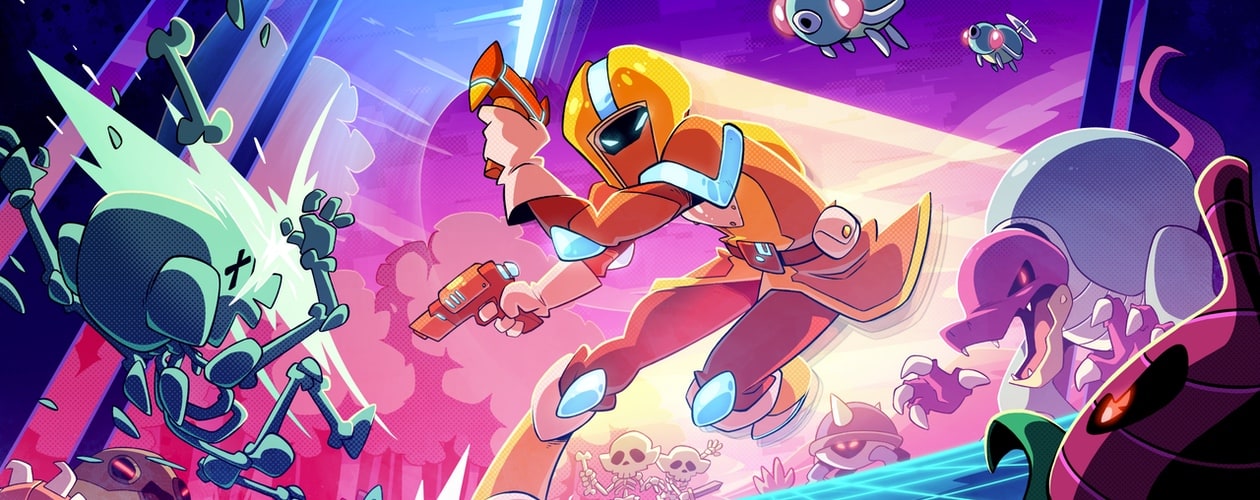

The Disk Knight has awoken, summoned from his slumber to load up on floppy disk software and take on the monsters and minions of the mad King. Chivalware is yet another roguelite genre mash-up, and it’s up there as one of the most immediate and snappiest examples that I’ve tried.
https://www.youtube.com/watch?v=TQd5v3f2Itw
Chivalware blends roguelite with match-3 tile combos, and rapid grid-based battles that draw you in as you dodge incoming attacks and dish out damage of your own. It might look like a turn-based battler, but keeping things in real-time keeps the action fast-paced and engaging.
Your first preoccupation will be gathering energy for your weapon, moving around the 4×8 grid, the left half of which is filled with coloured tiles in blue, yellow and purple by default. Trigger a tile and those connected of the same type will all disappear, feeding into your energy meter and giving you charges for your attacks (so long as you’re collecting a set of three or more tiles). Grabbing a set of tiles will also switch you to the corresponding weapon you hold as you trigger them, creating a strategic layer.
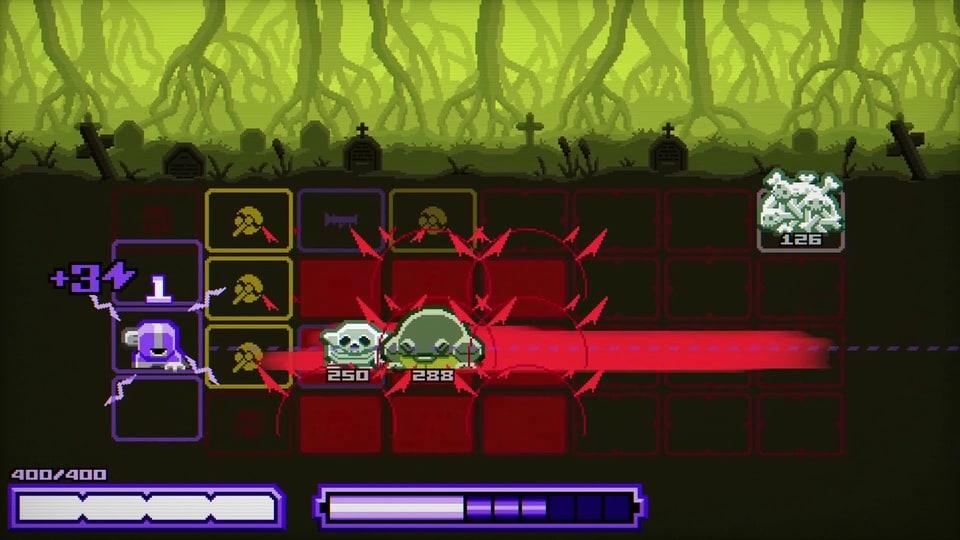
Your run with the standard Disk Knight starts off with a yellow pistol, firing a few spaces to your right, a blue sword with a three-wide swipe, and purple hammer with a short cone of damage. You might rather keep a little distance and prefer the pistol, so you need to hold off on grabbing that energy type until you’ve grabbed enough, or want the area damage of the hammer, so favour that instead…. or just roll with whatever ends up in your hands. Enemies also start to come with coloured shields, blocked weapons of that colour and forcing you to change things up.
But those weapons aren’t the only ones you’ll have on your run. After clearing a screen of enemies, when coming to a vendor or a mysterious opportunity, you’ll get the chance to grab new weapons, items and upgrades. New weapons are actually without colour until you choose where to slot them and what to replace, and then there’s opportunities to level weapons up, add modifiers both to a weapon and character as a whole, and plenty more besides. I had a really nice build one run with a minigun that would wind up and fire automatically, a sword that dealt freezing damage, and some bouncing hammers that dealt more critical damage on the second bounce. Admittedly I leant into the first two of these, but bouncing hammers is a daft and enjoyable weapon conceptually, if tricky to master.
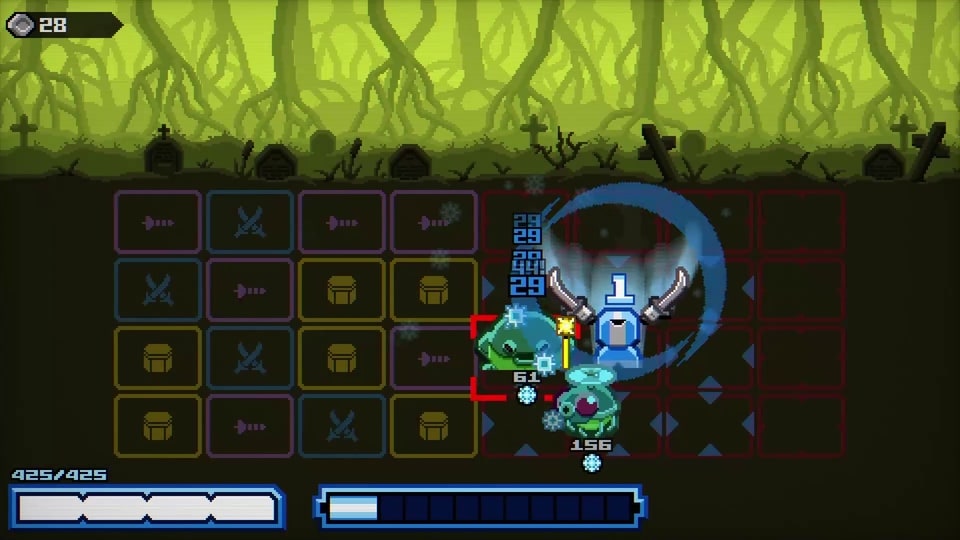
It’s worth mentioning again that the game plays out in real time, but the action remains fairly easy to parse and understand. Enemies don’t attack too frequently, and they have nice timing and sign-posted attacks. It could be a trail of spikes that heads towards you, a leaping attack that creates a wave of acid in all directions, or a simple melee swipe. You have the chance to evade them all, and there’s the kind of frantic nature of grid-based movement that you feel when playing Tetris. You can go anywhere on the 4×8 grid, and so can the enemies, but you always need to be on the left-hand side to gather energy and recharge your weapons.
The first biome builds up to a bulbous enemy that leaps around, splashing the aforementioned acid damage around and then gaining shields to force you to switch up your attack style. It’s a good boss fight, and I’m keen to see how later battles can match up to this.
Chivalware taps into the frantic tone of a match-3 or block dropping puzzler, but turns your grid-based movement into a rapid tactical battle. It’s well worth keeping an eye on for fans of roguelite mash-ups, and you can check out the demo right now on Steam.