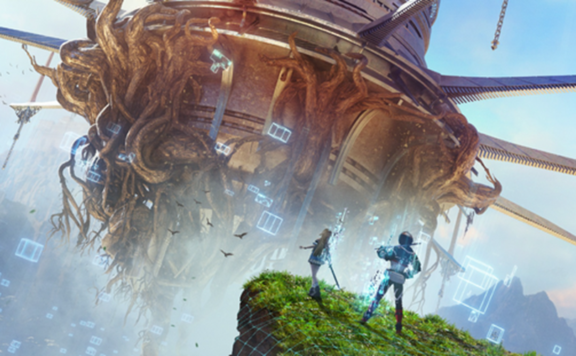
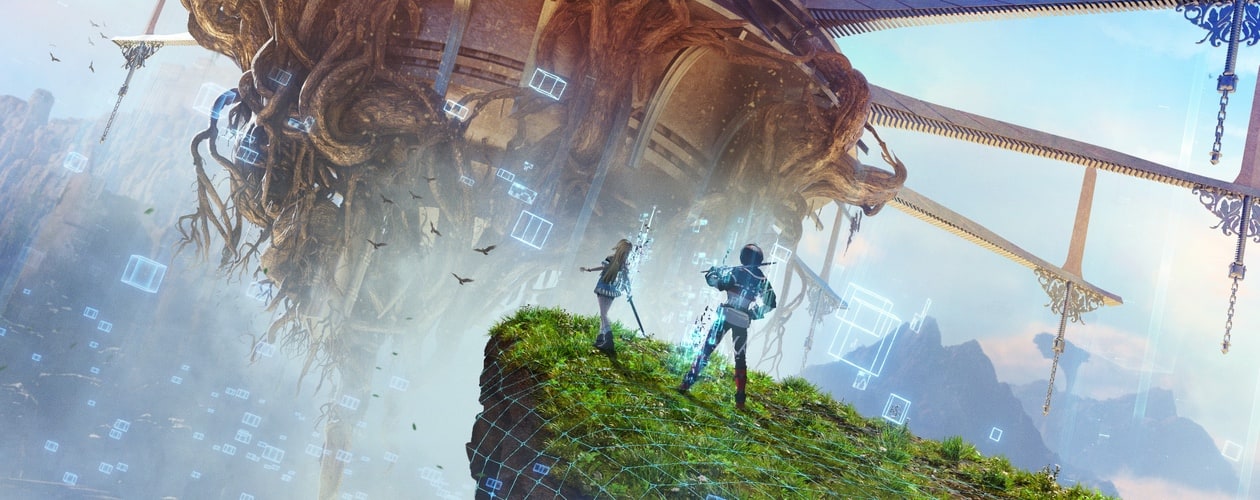
The idea of featuring a story within a story is pretty timeless, whether it’s a play, a film or a video game, and the nested VR MMO within the Sword Art Online series is a big part of what helped it explode in popularity in the first place. There’s an allure to living inside a game world, even if that game world has forcibly trapped you within it. Surely, a game that allows you to go on your own adventures within the very same MMO world that series protagonist Kirito found himself trapped in would be a slam dunk. Unfortunately, Echoes of Aincrad completely fails to capture that magic.
There have been a bevy of official Sword Art Online games over the years, yet interestingly, Echoes of Aincrad forgoes that branding entirely. Perhaps this was done to frame the game as a standalone RPG experience that didn’t require any knowledge of or attachment to the wider Sword Art Online narrative in order to enjoy, but if that was the case, then I still don’t think it works. Sword Art Online – the in-universe MMO of the same name – is a pretty generic Japanese high-fantasy setting. That works in the context of a meta-narrative about being stuck in a game like that, where that familiarity helps your suspension of disbelief as you follow along with the story. As an actual video game, though, Echoes of Aincrad fails to make an exciting first impression in that world.
Upon starting the game, you’re tossed into a dark dungeon as a silent and pretty generic-looking protagonist. Your experience fighting through this dungeon, encountering scheming player-killers, and teaming up with veteran player Iori in place of your wiped squad of friends, is all framed as happening during the “beta test” of Sword Art Online. It’s a clever way to frame a prologue, but it goes on for hours. The glacial pacing had me convinced that I was stuck with this protagonist, despite Echoes of Aincrad promising that you can shape your own character and your own story. The game does eventually move on to the grand launch of Sword Art Online, though, where you create your own character, log back in, and proceed to experience the iconic opening arc of the original series from a different perspective. Ten thousand players are suddenly trapped in a VR MMO and tasked to participate in a death game where dying in-game kills you in real life, and the only way out is to make it to the final floor of the dungeon.
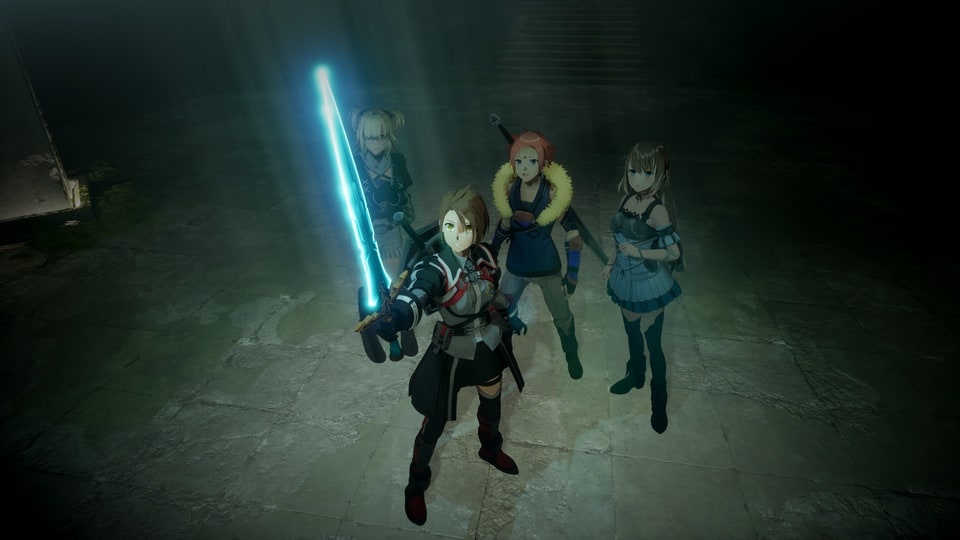
Even as things properly kick off, though, I felt like I was experiencing more of a sidelined side-quest than a meaningful standalone adventure. For one thing, despite him not being the focus of the game, series protagonist Kirito is brought up and emphasised so often.
The baggage of his presence often weighs down on the narrative of Echoes of Aincrad, and it doesn’t help that by comparison, our actual protagonist has zero agency, voice, or even presence in the story. The plot proceeds down an incredibly linear path, your protagonist simply along for the ride as more interesting side-characters interact across each cutscene. This isn’t an open-ended experience where you get to carve out your own legend, and as a psuedo-MMO it does nothing to make your personal journey feel very important.
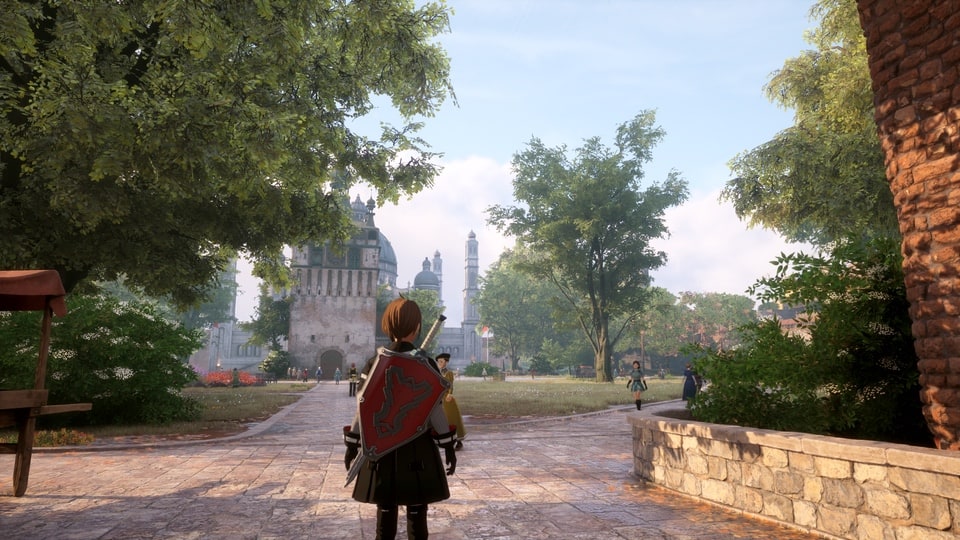
Sadly, the world and quest design reflect all those same issues. Echoes of Aincrad puts up a lot of artificial barriers between you and the game world that prevent exploration and immersion. You don’t have an open interconnected world to wander through like a true MMO. Instead, queuing for a quest in the main hub teleports you to a variety of semi-open zones and dungeons. Even within these zones, you’ll have arbitrary invisible walls pushing you away if you dare to venture off the predetermined path to your goal. There’s some visual variety later into the game that helps these dungeons feel fresh, at least, but their linearity is never improved.
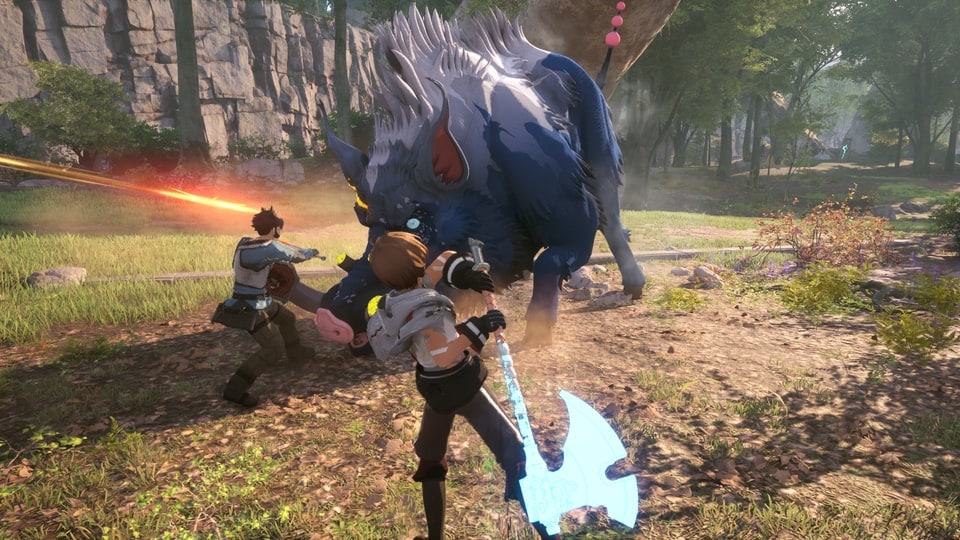
The strongest suit of Echoes of Aincrad is easily its combat. It’s an action RPG with a pretty unique take on intermingling parries, dodges, and a partner system together. In most missions, you’ll have a chosen partner NPC with you who you can set into Free Mode or Switch Mode. In Free Mode, they’ll target any enemy and act as they please, but eventually build up an exhaustion meter. By setting them to Switch Mode, you can empty that meter, and then still have them help in battle by targeting a specific enemy. When you dodge, they’ll know to step in and attack that enemy. When you successfully parry, you can trigger a counter-attack from your partner. It’s a methodical flow that prevents the game from just being mindless button-mashing, and I had a lot of fun learning these flowcharts.
Unfortunately, Echoes of Aincrad isn’t the kind of game where I can recommend getting into it just for the combat. So much of the experience is bogged down by glacial pacing, uninteresting loot, and railroaded quests. It isn’t the kind of game you can tune out the voices in and experience as an arcade-y action romp. It also isn’t the kind of immersive, open-ended VRMMO emulation that fans of Sword Art Online have wanted for so long. Frankly, I don’t know who this game will end up being for, when the flaws so far outweigh the pros in this messy package.