We sure do love samurai in gaming, don’t we? Ancient Japanese warriors have spearheaded a raft of action games over the last few years, from Ghost of Tsushima to Assassin’s Creed Shadows, but if you want to look for the progenitor of this katana-wielding movement, it’s hard to look past Onimusha. The Capcom-developed series became a favourite of the PS2 era, offering three mainline games before fading from memory, with it Japanese developers occasionally giving the series a little kick with a remaster here and there. Onimusha: Way of the Sword is a brand new title in the largely dormant franchise, and a rather good reinvention of the series for modern platforms…. but how does it hold up on Nintendo Switch 2?
Capcom, in their infinite wisdom, are continuing their support for Nintendo’s system following successful appearances from Resident Evil and Pragmata. As we saw there, this is a port that makes smart decisions about the less powerful hardware, and brings us a fully-fledged version of the game that you can also take on the train. Or to the toilet, I won’t judge.
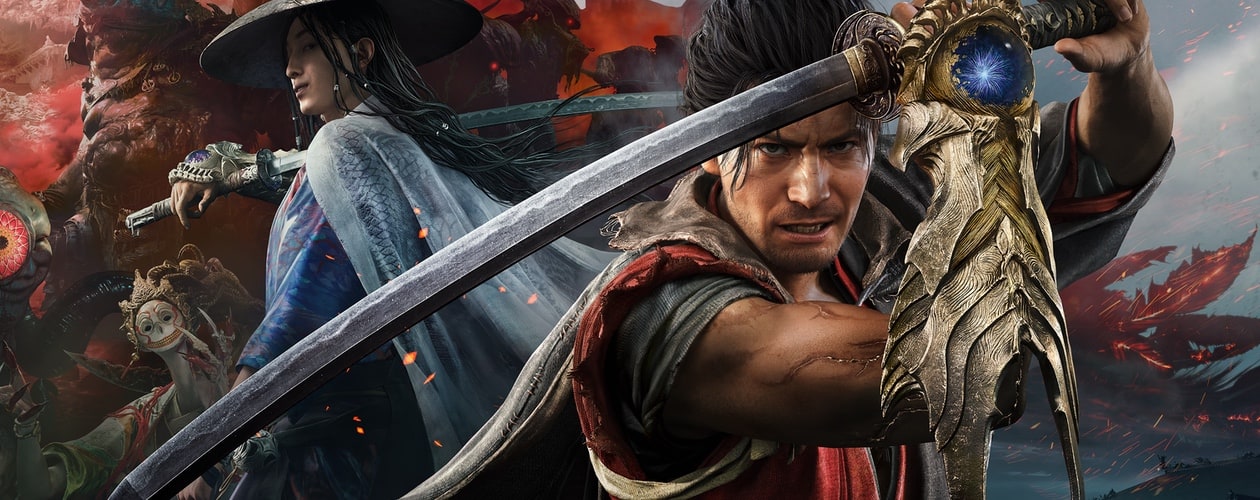
Miyamoto Musashi might be my favourite protagonist of the year. World-weary, cocky, capable of cleaving monsters straight down the middle, he’s a swaggering Han Solo of a samurai, caught up in the middle of otherworldly shenanigans that he really would rather not be. The unwilling owner of an Oni-powered gauntlet, he’s drawn into the fight against the Genma, a monstrous and ugly bunch who are finding a way to corrupt our world.

Switch 2 in docked mode.
That means an adventure that leans into the original game’s hack-and-slash action, while scribbling a spot of Souls-like difficulty into the margins of each boss fight. What that means for players is a game that does a great job of empowering you, throwing the steady drip of dopamine at you as you slice through Genma, before flooding you with the adrenaline and endorphins of an edge-of-your-seat contest. It’s an emotional and physical rollercoaster that, similar to Pragmata, benefits from doing things a bit differently.
That difference extends out into this Switch 2 version, attempting to bridge the power gap between Nintendo’s portable and the chunky home platforms that you’d look silly with at the bus station. The RE Engine once again showcases just how adaptable is, and by this point, Capcom are old hands at making the Switch 2 dance to their tune.
There’s no getting away from the fact that this is an action game being played at 30fps, though it’s great that Capcom has actually implemented an optional 30fps cap this time around. The simple fact is that Switch 2 just isn’t capable of making things look as pretty as Onimusha does without having to compromise on frame rate. Just like the recent appearance on the platform of Elden Ring, if you play it side by side with another current gen version of the game, the Nintendo version will feel sluggish, that slower response time forcing you to think about pushing the buttons just a bit more in advance.

Switch 2 in docked mode.
But when it’s taken on its own? You don’t notice. Your mind can adapt to this. You get on with enjoying the story and the over-the-top action, and boy is it worth it. There is the option of a variable refresh rate that can perform up to 60fps, which goes hand-in-hand with the VRR of the internal screen and can feel more responsive. Playing docked and with the Switch 2 not having a VRR output to TVs, the reliability of the 30fps lock is preferable, as opposed to the cost of judder and clear shifts in frame rate. It will come down to personal preference and how you’re playing.
There are other concessions. Onimusha on Switch 2 offers a 1080p image when docked, and a 900p image when in handheld. It’s clearly a softer image than you’ll find elsewhere, and it only gets more obvious on the smaller screen, where it draws upon less power to produce its visuals. Playing it on the small screen definitely gives you some ‘I’m playing on Switch’ vibes, but on a big screen, the art direction, phenomenal acting and score, and the enjoyable action all overwhelm any thoughts about how crisp Musashi does or does not look.

Switch 2…. still in docked mode.
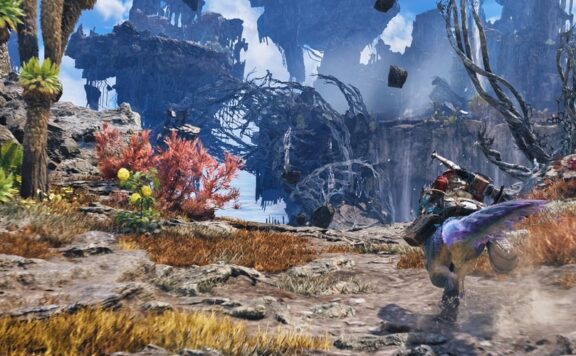
Capcom has done a better job with Onimusha where the underlying visuals have been tuned to the system. The visuals and art direction largely look excellent, and key details like the character’s realistic flowing robes are retained here. That said, you can tell there’s a reduction in detail on distant foliage and buildings, a low resolution Miasma effect, and character hair is once again a key sticking point, with some distracting anti-aliasing on top of its reduction in detail. This isn’t all that obvious, helped by Musashi’s short ponytail when compared to the massive mop of Pragmata’s Diana, but you can be happy enough that this is still a very good-looking game.
The Switch 2 version of Onimusha: Way of the Sword does get its own features, though, in the shape of motion controls. That’s right! You can turn the game into an old-school waggle fest reminiscent of your favourite Wii titles, slicing, chopping and aiming your bow with the right Joy-Con 2. This would not be my chosen method to play the game – it’s hard enough with actual button presses – but it’s nice to shake things up once in a while if you’re feeling frisky, and the bow aiming is surprisingly responsive in this mode.
The one final question – do I like the English voice acting? There’s definitely an initial disconnect between what you see – a Japanese samurai setting – and hearing well-to-do British accents, but I found they really got under my skin. Onimusha: Way of the Sword is just a bit off-kilter, and the English voice acting reflects that really well. Did I know I wanted Japanese samurai who sound like British businessmen at the start of the day? No, I did not.