

Aspyr continue to fill the void in the Switch 2’s library. Thanks to the failure of the Wii U, and the less powerful hardware of the original Switch, there’s a raft of games that haven’t made it to Nintendo platforms up until this point, and for those who worship at the altar of blue dungarees, that’s been a source of constant pain. Or, at least, mild envy. And so Aspyr have set out to ease Nintendo owners’ agony, following up on their ports of the most recent Tomb Raider trilogy with a duology that’s worthy of standing next to them: the Lord of the Rings-adjacent Middle-Earth games.
Middle-Earth: Shadow of Mordor and Middle-Earth: Shadow of War are undoubtedly two of the best action-adventure games to come out of the 2010s. Originally released across generations on PS4, PS3, PC, Xbox One and Xbox 360, Shadow of Mordor managed to capture fans in several ways, whether by riding on the wave of renewed interest in the Lord of the Rings franchise thanks to The Hobbit films, or by wrapping its combat in a counter-heavy system that felt reminiscent of Rocksteady’s line of Batman-starring Arkham games, alongside the innovative Nemesis system.
Now arriving on Switch 2, the pair of Middle-Earth games immediately manage to feel thoroughly modern, despite some 12 years separating the original game from this remaster release. Performance-wise, both games hold a locked 30fps, which is slightly disappointing, but not unexpected. Visually, they both hold up extremely well, still evoking a fantastic sense of atmosphere, weight and menace, even with the slightly older original, but the crucial thing remains in how they both play.
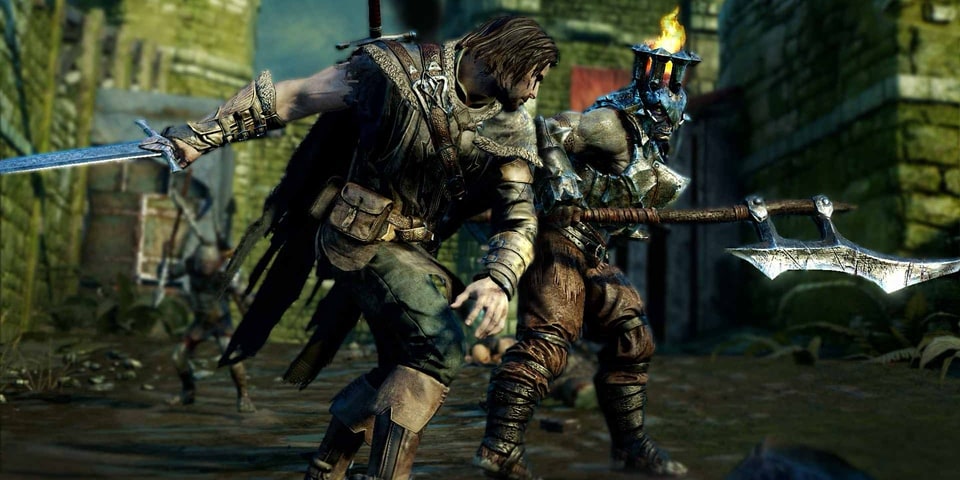
Middle-earth Shadow of Mordor on Switch 2
The Nemesis system remains a truly breathtaking achievement, and it’s criminal that Warner Bros. – who successfully patented the idea in 2021 – haven’t found a way to utilise it further in the past decade. This system allows you to face off against a legion of Orc commanders and, if you fail, your opponent actually grows in stature and difficulty, turning even the most underwhelming enemies into potentially lethal villains that you’ll be telling tales of to your children.
It makes every one of these encounters feel alive with danger and genuine repercussions, and through both of these games it evokes a sense of world-building and consequence that few games are capable of matching. The fact that Warner Bros. locked this tech away – the patent runs until at least 2036 – means that these are utterly unique games, with a system that you simply won’t see anywhere else, especially with Monolith Productions having been shut down.
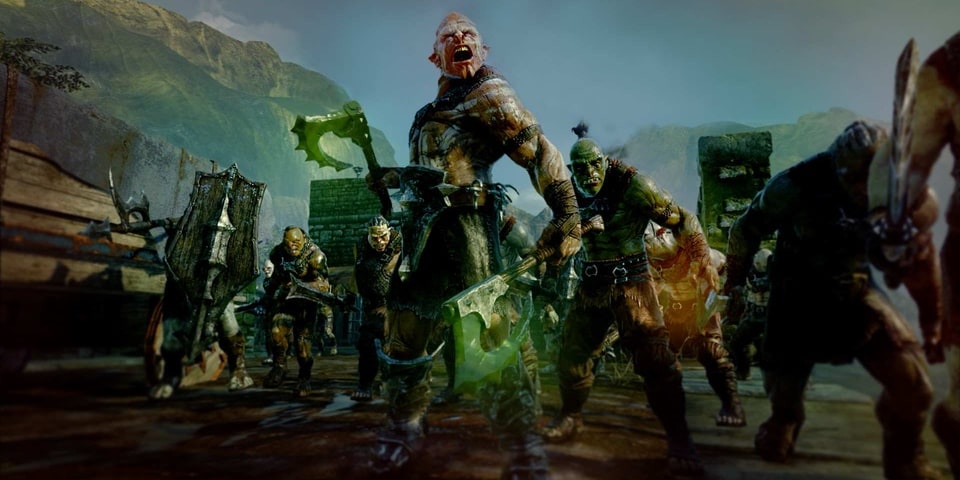
Middle-earth Shadow of Mordor Nemesis
That alone makes them worth checking out, and with their arrival on Switch 2, they’ve become even more accessible, benefiting hugely from handheld play and being able to dive in and out with ease. The open world and its open-ended gameplay loop work surprisingly well for pick-up and play – identify a target, head towards the nearest quest marker, have a few edge-of-your-seat skirmishes, and pop it down again. There is the mild danger of getting into this loop for far longer than you intended, but that’s a problem with most (good) games.
So much of the Middle-earth games’ success hinges on the combat. While it’s certainly familiar, riffing on the counter-heavy hallmarks of the Arkham titles, or a step on the evolutionary path to Insomniac’s Spider-Man games, it is responsive, brutal, and constantly rewarding. The Nemesis system adds further anxiety to those moments, and amongst so many open-world games across the years, both Middle-Earth games stake a unique and compelling claim that’s all their own.
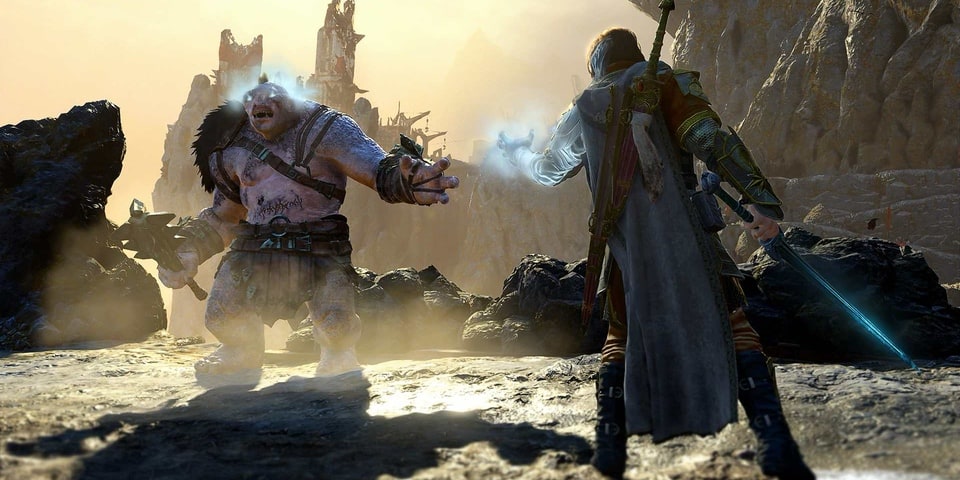
Middle-earth Shadow of War on Switch 2
It helps, of course, that this is all set in Tolkien’s beloved fantasy world. Set between the events of The Hobbit and The Lord of the Rings, it feels totally authentic; the disgustingly diabolical orcs are instantly recognisable, Peter Jackson’s visual identity carries through from his celluloid versions, and the scorched landscapes puts you right at the centre of one of literature’s most evocative settings. There’s the added interaction with various characters from the mainline series, too, including, most crucially, Gollum, whose appearance ties the entire tale together.

