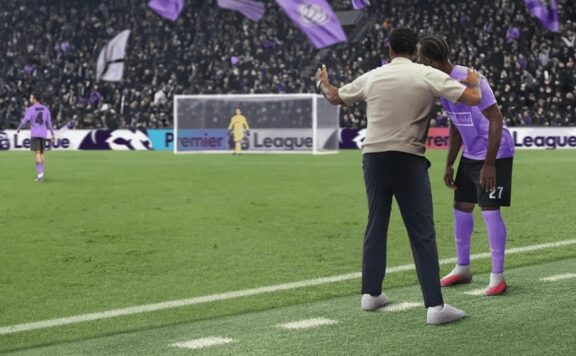
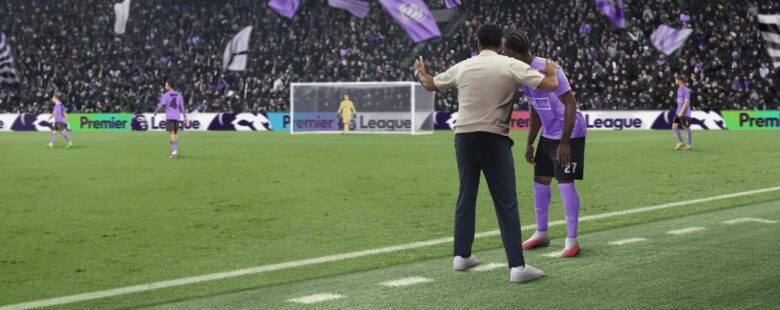
Football Manager 27 is a better game than Football Manager 26, but that’s not the highest bar to get over. There have been improvements over last year’s entry, with Sports Interactive finding a bit more stable ground with Football Manager 27 in their new engine and interface overhaul, yet there still seems to be a bit of spark missing from the experience.
One of the bugbears of last year (aside from missing features of previous games) was the user interface layout, and how navigating it was cumbersome. This was down to one of the biggest changes of moving to a new layout from the traditional one. In Football Manager 27 the layout is much easier to navigate. In FM26 I would be clicking around quite a lot to get where I wanted to go, whereas a lot of that information is now front and centre.
To give just one example, staff recruitment is much smoother and, as someone who tweaks the backroom staff quite a lot, I was thankful for it. In FM27 when you get a list of applicants their main attributes are also shown in the list, while last year would force you to click in and out of each individual to get the specifics. It’s a good tweak.
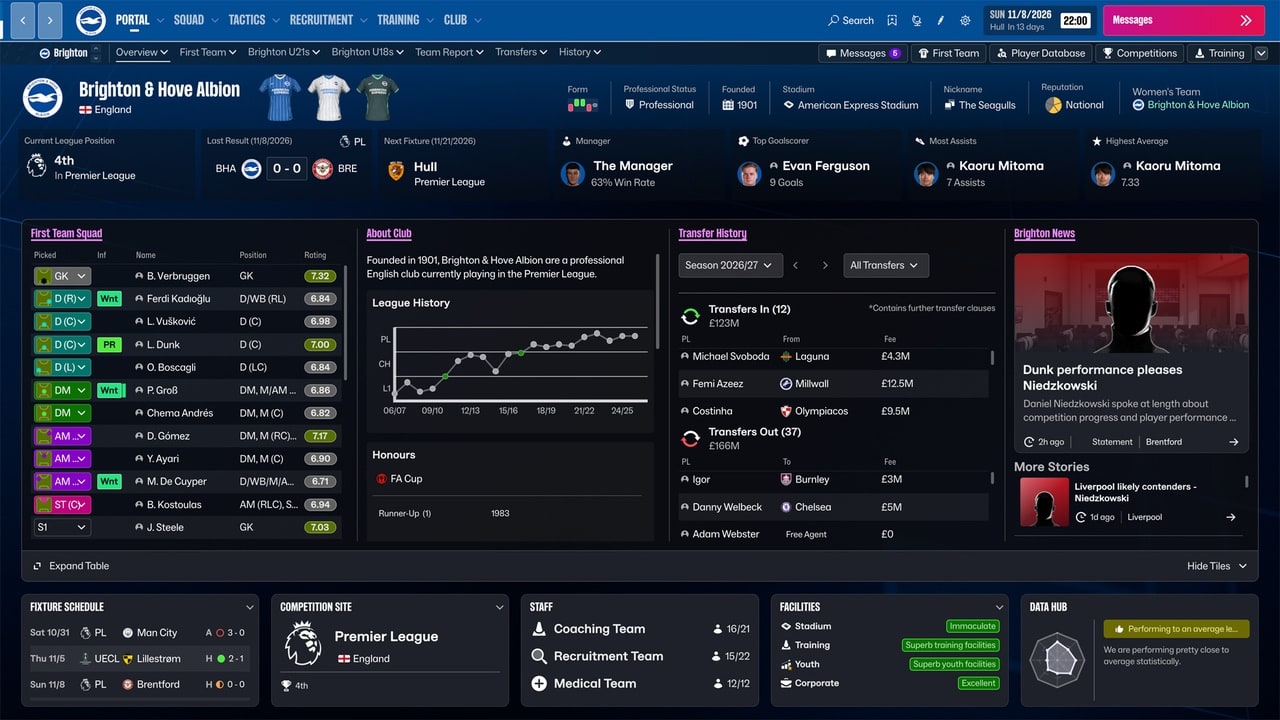
One of the main additions to FM27 is the Tactical Effectiveness which goes hand in hand with training. Essentially, tactical effectiveness is how well can individual players adapt to the tactics you are asking them to play. That relies on their own skillset, preferred style of play, and how much they buy in to your approach on how to play the game. Within training you can set up sessions that focus on tactical effectiveness, and it is worth spending the time to tweak and incorporate it.
You don’t want to spend all of your training time on tactical effectiveness, otherwise you won’t have time for any match prep training tailored to what you need to focus on to beat your next opponent. You may also end up sacrificing individual training time, reducing the time available for players to work on their own improvements. The thing with tactical effectiveness is that it takes time to see meaningful changes – longer if you are working with a lower league club and less adept players – and it can also add to frustration as you try to figure out how to improve the effectiveness. As it’s a new system, it will be one that may need a couple of iterations before it becomes something that is easier to understand.
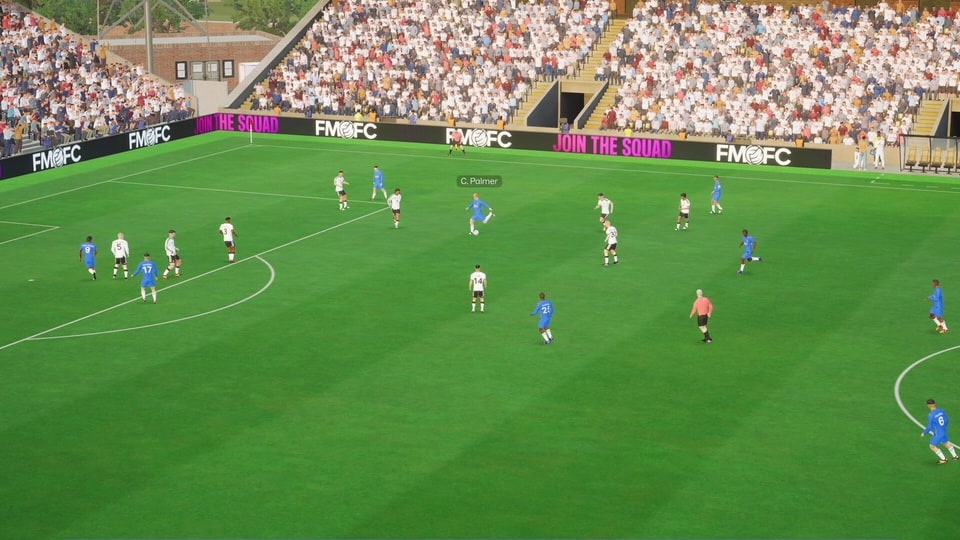
Onto the match day itself and another new change is tweaks. Next to the shouts tab there is now a tweaks tab allowing you to make some tactical changes on the fly. These tweaks include switching to playing from back, going long, exploiting the wings, playing with either more patience or urgency, or trying to disrupt the opposition more. I have used tweaks a few times, but I am not too sure how much of an impact they have had. If you want more detail while in a match it is better to pause things and go into the full tactics to make changes based on what your are seeing unfold.
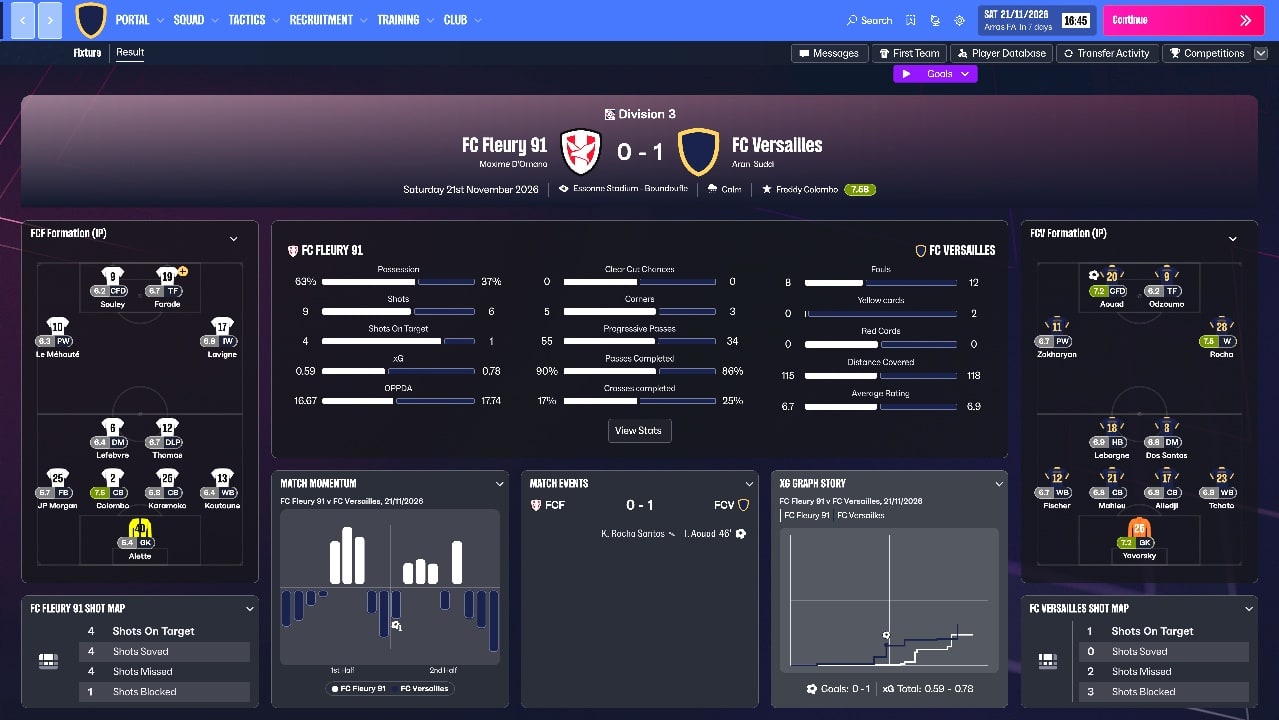
What hasn’t changed, and this is historical for the franchise, is how sometimes matches can feel a bit too scripted for a certain result to take place. I am not expecting to win every match – I never do – but when you have a match where you are dominating, the opposition is down to 10 players, and it still goes to penalties after a 0-0 draw which you invariably lose, you do question what more you could have possibly done.
Bringing back transfer deadline days and cup draws after they were missing from FM26 is good, but such basics that are key points of the footballing calendar should not have disappeared in the first place. Additionally, press conferences haven’t changed with the same questions being asked, and some still making no sense. Why are journalists asking if I am feeling under pressure when I have just taken over the job at a struggling club in a lower division, insinuating I am close to being fired? Overhauling the press conferences would likely be a big job for Sports Interactive to do, but it is something that needs to be more dynamic if they are to have a bigger impact on anything.