

When first announced for the PlayStation Vita, there were genuine fears that we’d never see Oreshika venture beyond its land of origin. It’s an enriching, complex role-playing game, the likes of which publishers are often afraid to localise due to their limited appeal within the western market. Sony took a punt, however, and now – less than a year after its Japanese debut – Tainted Bloodlines has finally made the journey overseas.
Oreshika is developed by Alfa System – that’s your first hallmark of quality right there. Although much of the studio’s work has centred around ports, its recent credits include handheld classics such as Tales of the World: Radiant Mythology and, of course, Phantasy Star Portable. In other words, Alfa System knows how to whip up a top-notch RPG that’s perfect for on the go.
Although technically a follow up to 1999’s Ore no Shikabane o Koete Yuke (“Over My Dead Body”) for the original PlayStation, Tainted Bloodlines is very much its own game. Set in a fictional representation of feudal Japan, Oreshika follows a cursed clan of warriors in pursuit of a demon adversary. Although they appear to look and fight like any regular humans, each clan member ages at an accelerated pace with an overall life expectancy of just two years.
This curse makes for an interesting premise while also having a direct hand in how the game mechanics play out. Like many Japanese RPGs you can expect your regular dose of text boxes and turn-based combat, yet Oreshika has a few interesting systems of its own.
Most of these are centred around sustaining your clan through a series of betrothals and rituals in order to keep the bloodline running. Starting with three core members of your own design, you’ll soon unlock the option to perform “unions” with the game’s expansive list of deities. A few hours in and, eventually, you’ll also be able to align with other neighbouring clans through marriage, watching as your family tree continues to branch out.
Game flow in Tainted Bloodlines is broken down into months. In each of these allotted periods players are free to purchase equipment and interact with NPCs while also being able to carry out one major action, such as performing rituals or delving into one of the game’s many labyrinths. The refreshing thing about Oreshika is that there’s no clearly defined goal – as long as you have a healthy stock of heirs, you can go month-to-month without needing to chase your primary objectives. Eventually, however, you’ll need to carry out these story-centric missions if you are to discover new territories and advanced game mechanics.
Most take place within Oreshika’s dungeon-like labyrinths. Each one plays host to wandering bands of enemies who, when in close proximity, will trigger turn-based battle sequences. These should be instantly familiar to anyone who has dabbled with the genre before, placing both parties on either side of a battle line. However, it must be say said that Oreshika has a number of distinguishing features that need keeping track of.
For instance, taking damage in battle can affect a clan member’s vigour. Once this secondary guage has been depleted, that character is gone for good with no coming back. Therefore, Oreshika demands that the player constantly cares for their warriors, patching wounds between fights and curing their ailments upon their return home. Another equally interesting feature is how the game handles skills. These active abilities that can be used in combat to enhance allies or damage their opponents. Instead of learning them however, Oreshika works them into its loot system, giving them an almost collectible-like presence in the game.
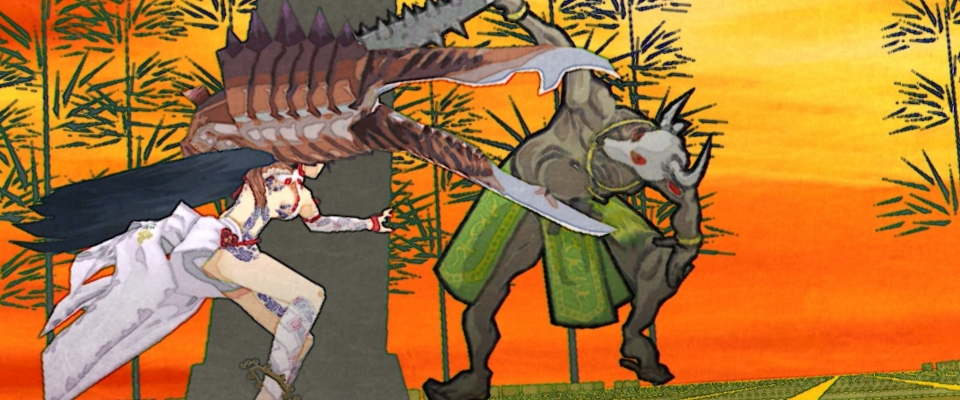
Although it has its nuances, the appeal of trawling Oreshika’s labyrinths will soon begin to fade the further and further you explore them. Without a comprehensive checkpoint system, players will be forced to return to the beginning and work their way back through any hot spots they may have encountered. Of course,you’re free to roam these dungeons all you like, but a timer in the bottom right corner will start to count down. Once it runs out, the game will ask whether you wish to return home or spend another month exploring.
Back at base, you’re free to spend your gold on new equipment while also continuing to develop your settlement, upgrading shops and other landmarks. Again, as mentioned before, you’ll also want to take the occasional month off in order to perform rituals or simply to rest your other clan members.
This combination of conventional JRPG tropes with management gameplay aspects gives Oreshika a somewhat unique position. It’s the kind of game I can see myself going back to occasionally without feeling the need to truly understand its underlying lore or narrative. Helpfully for such instances there is an assistant in-game that will give you recommendations of what to do, saving you from much of the legwork.
Beneath its core, Oreshika has an intriguing network of secondary features at play built specifically for the Vita. One that really surprised me was the screenshot tool, which allows players to capture any in-game moment by tapping a small icon in the bottom right corner. Although I can’t see myself using it often, it’s a great touch. Also, by exchanging QR codes, players can visit each others clans and effectively tie bloodlines. Features like these speak more to the game’s Japanese fan base but it’s great to see them there regardless.
Although the music doesn’t quite stand-out, Oreshika more than makes up for this with its gorgeous art style. Walking the line between traditional 3D models and Japanese brush art, it has an Okami look about it. It’s just a shame that so many of the game’s environments are hemmed in and viewed from a bird’s-eye angle.
What’s Good:
- Offers a unique approach.
- Looks great in places.
- Avoids many of the regular JRPG pitfalls.
- Some nice added Vita features.
What’s Bad:
- Monotonous dungeon design.
- Throwaway story.
Overall, Oreshika: Tainted Bloodlines is a competent handheld RPG awash with some really interesting ideas. Allowing players to tackle the game at their own pace and gradually building their own family tree gives it a sense of identity sorely missing elsewhere in the genre. The only aspect that really failed to shine was the labyrinth gameplay. The fast-paced combat and progression systems are fun to toy with but eventually grow stale as you’re forced to run laps around the same areas over and over. If you’re the type of player who loves a healthy dose of dungeoneering in their JRPGs however, Tainted Bloodlines could be your perfect portable fix.
gernboes
Orsehika? ;)
Jim Hargreaves
*Waves hand*
“You didn’t see anything…”
zb100
Looks lovely.
colmshan1990
This looks good, and the review reads well. I’ll pick this one up when I have freetime again.
I have a question though, I don’t understand the screenshot tool- the Vita already has that built into the OS, why is a game adding that too? Seems redundant.