

With Final Fantasy straying further and further away from its turn-based JRPG roots, many were looking to Square-Enix to rekindle the flame of the genre and Bravely Default was that fire that blazed through the 3DS a few years ago. That game sadly fizzled out towards the end, but Bravely Second starts where the first game left off, boasting some new twists on the JRPG formula. They may be simple conceptually, but they’re game changers.
Things begin with familiar territory, with a familiar damsel in distress situation, and the Brave and Default being reintroduced. Yet one of the first things I noticed was that the jobs you get from defeating Asterisk holders in the main quest are all new.
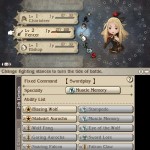
The first few introduced were variations on classic RPG tropes, and it wasn’t until I’d unlocked these that the significance of the changes became apparent. The Wizard, as the first example, is fundamentally a Black Mage-like class, but the Spellcrafting ability throws the rulebook out of the window. Skills can be combined with skills from other jobs. Want to grant your entire party a boost to their evasion? Spend a little extra MP and make sure you have the Spellcrafting ability equipped and it’s entirely possible!
This isn’t limited to this one job. Bishops can increase the potency of magic by using extra Brave Points (BP) to cast the same spell on the same targets twice. Astrologers can learn an ability that prioritises status abilities. Fencers can learn stances, using the Blazing Wolf stance to raise Physical and Magic attacks by 25%, but also switch stances once the unique Wolf Fang attack is used.
For those wondering where all the jobs from the first game went to, they’ve been transferred to side-quests, which are far more interesting this time around due to their self-contained narratives. Each one has two minor antagonists from the first game enter a disagreement about a particularly touchy subject matter, with Edea being the one to break the deadlock, deciding which side she falls on.
Doing so will make you enter a battle in which you can only obtain one Asterisk of the two. This makes your party composition all the more involved, as you may be lacking in sufficient magic power, but might also wish to steal items, tearing you between the two sides. Some of the themes explored are of a particularly sensitive nature, so the moral quandaries the game puts you in make choosing a particular side all the more difficult. You can obtain both the Black Mage and White Mage, but at what cost?

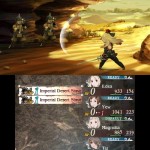
One of the things that Bravely Default did so well was streamline the JRPG experience to take out a lot of the aggravating fluff. You could change the encounter rates on the fly, speed up battles, and even have shortcuts to attacks. Battles in Bravely Second retain everything that made Bravely Default a JRPG that respected your time, but it also introduces one key new addition that makes grinding far less of a chore.
When you overwhelm a group of enemies in one turn, instead of granting a bonus, the game will ask if you want to carry on. Doing so will initiate a new random battle. This of course can be stacked as long as you defeat the foes in one turn, increasing a multiplier to overall experience, job points, and gold earned throughout the cycle. If you die or run away however, all the accumulated rewards are gone. Sometimes subsequent battles happen automatically, further increasing the risk.
There are of course plenty of other things that have been reused. The titular “Bravely Second” mechanic that allows for instant turns is back from the first game, and requires putting the 3DS on standby for several hours or using real world cash to replenish the total points available. One can still get by without using it, but it’s handy in a pinch.
It’s also possible to send or receive characters to other owners of the game, linking party members to friends’ data saved on the game card in order to learn abilities for jobs the characters might not have learned. During the preview period, the online functionality hasn’t been enabled, but the game thankfully has AI partners after each chapter for you to befriend that serve this purpose.

Other parts of the first game have been reskinned to a slightly different theme. The Moon Base acts exactly the same as the rebuilding of the town in Bravely Default, though you can receive gifts as well as buying items at save points. Real world people encountered on StreetPass will be able help with this, but again the scope for testing this was limited. Ba’als can come to your colony and allegedly attack it, though none have so far appeared in my game.
I’ve already spent a good 30 hours of time in the game, and while this might seem like a long time, the bulk of my time was used to level up my jobs and use as many skills and abiliites as possible to maximise the efficiency of my team. A few more were “spent” with the brand new mini-game where the party creates toys to sell. At this point, it’s unclear what the point of it is, but there probably is one somewhere.
Bravely Second takes a lot of what made the first one so special, expanding the mechanics to make it fresh. At the point where I am in the game, I’m having an absolute blast with it. It is with great hope, that the last few acts don’t make this one any less special.
dirtiestturnip
Bravely Default was the first 3DS game I played and I thought it was an amazing game. Pre-ordered Bravely Second and I have every faith that it will be as good as he first one.