

Just like the resistance fighters that hit and run KPA patrols in the streets, Homefront: The Revolution’s development has looked like an uphill struggle at times, as it follows on from the poorly received original, has changed publishers a few times and more.
Yet despite the adversity the team making it have faced, they are making it, and after playing the Red Zone demo – which Stefan wrote about from Gamescom – I sat down and talked for far too long with Senior Narrative Designer at Dambuster, C.J. Kershner, and touched upon as many aspects of the game as we could.
TSA: So I’ve played this twice today, I went and hit it up as soon as I came in and then I had a little bit of time so I went back around…
C.J. Kershner: So let me start by asking you a question: what did you do differently between the two playthroughs?
TSA: The first time, I mostly just used the Molotov Cocktail, so the second time I tried using the remote control car and stuff. The car’s really good fun!
C.J.: Did you attach the Molotov to the car?
TSA: No, I didn’t know you could do that. That’s awesome!
C.J.: That is a thing you can do. You can take any one of those items that’s along the bottom of the screen in our Guerrilla Toolkit and combine anything with anything.
They’re not all available in the demo, so I don’t think we’ve got proximity-based detonation in there at all. So I don’t think the Molotov can be remotely detonated in the demo, but in the full game you’ll be able to leave that in a doorway or in the street and then be able to phone it up, like you do with the explosives.
You can take the distraction devices and attach them to the RC car and drive the RC car around with firecrackers going off on its back!
TSA: I also like that the enemies don’t just see the RC car and go, “Oh, it’s an RC car, that’s fine.”
C.J.: No, because this shouldn’t be here!
TSA: Exactly, and so many games miss that, where you have something that doesn’t make any sense and the enemies ignore it, so it’s a nice touch that these one will not just let you have free reign.
C.J.: Well they’ll take out the car, but then they’ll also start looking around for you too.
TSA: I found that out very quickly! I also like the Koreans patrolling, which feels like a very random schedule. Apart from the one right at the start of the demo, the rest of them leave you thinking that something’s in the area, but it’s not a preset thing and they don’t just walk through, they actually seem to investigate what’s going on.
C.J.: I think you’ve actually picked up on part of the guerrilla fantasy that’s part of it. We haven’t really spoken about it, because not a lot of people have picked up on it, but we talk a lot about vulnerability and how the overwhelming response [from the KPA soldiers] is what keeps you on the back foot and what makes you feel not like a one man army.
You’ve hit upon something really interesting and not often spoken about, which is the unknown. So I know I’ve got an objective on the map and I’ve got these objective markers, but between me and it, there could be anything.
I’m trying to remember what the exact term within warfare is… but it’s that fog of war and not knowing what we could be walking into that creates a tension and a fear that is really, really potent in contributing to that guerrilla fantasy.

TSA: Talking of the guerrilla element, you’ve got running away as not just being an option but as the more correct choice compared to standing and fighting. As I quickly learnt, if the airship comes in, you just go, just book it.
C.J.: Just run and get away from it by any means available!
One of the nice things about the Red Zone which we’re showing now is that you’ve got lots of options available to you when you decide to run. That’s in terms of both… I say verticality though it’s really layering, because verticality implies you go up, but you can actually go down as well.
TSA: Yeah, I spotted that there were a number of places I could duck down as well into craters and stuff.
C.J.: There’s craters, basements, we’ve got a local and a city-wide sewer network that you can use. So again, if you’ve played the demo, I can point you towards things that you might have walked by.
After you take a transceiver in a room that overlooks the container yard, if you go out that window, there’s both the container yard, but immediately to your right, there’s an open manhole that you can jump down. I think that drainage pipe takes you into a building basement that’s two blocks away and, again, that’s a local travel point and there’s no loading screens, so it’s just I see an open manhole, I climb down the ladder, I walk down this sewer tunnel 200 yards and I pop out somewhere else!
TSA: The city feels like it’s very naturally put together as a city, and particularly as one that’s been bombed out and seen some serious warfare. Though stuff is placed so you can get around really easily, it still feels like stuff that would quite naturally be there, which a lot of games miss and then end up with what I call Tony Hawk’s Syndrome, where nothing is that perfectly designed.
C.J.: One of the things from an artistic and a level design standpoint that we take into very heavy consideration, especially with regards to the Red Zone that we’re showing off, is how warfare has historically reshaped cities. What that does in our case is provide a lot of opportunities for players to clamber around things and get into a second or third floor window by some method other than walk through the front door and take the stairs up.
If the back half of the building is gone, you might find you’ve got a rubble pile leading up to the second floor and a tipped over dresser that allows you to get through a hole in the floor to get to the third. Now, if that building happens to overlook a strategically important location, whether it’s an intersection, a strike point or a fortified stronghold, you’ve now done something that’s unique to you, feels very much like something that you’d experience in a guerrilla war and you’ve given yourself a bit of a tactical advantage.
You can actually be proactive in that situation, rather than if you’re out in the open and get caught by a patrol in the street, you’re always reacting.

TSA: You’ve talked about the Red Zone, but the game’s also going to feature Philadelphia’s Yellow and Green zones as well?
C.J.: Yes, so we’re not showing too much of the Yellow Zone right now, but it is a different flavour than the Red Zone. The Red Zones are very chaotic, they’re very lawless, there’s lots of gunfighting and it’s where the guerrilla fantasy, the shock and awe part, really comes alive.
The Yellow Zones are much more about the civilian populace and about surveillance. There’s no need for surveillance in an area where you’ve got not people, and it’s why when you encounter patrols [in the Red Zone] they’ll shoot on sight as opposed to stopping and investigating.
So yeah, the Yellow Zone is a very different flavour of gameplay and the two of them provide really great variety. If you were just to have all Red Zone all the time, you may get bored of it after a while, but you can go from a tense gunfight to ducking down, following a path and popping out in a residential district where you see people trying to live their lives, having barbecues, trying to grow plants on their balcony, rigging up new solar panels.
Suddenly you can’t have that gun out anymore, because not only will the occupational police come down on you like a ton of bricks, but people themselves will back away because they don’t want anything to do with you initially.
TSA: And the Green Zone, which is obviously at the core of the occupation…
C.J.: As somebody who’s not from this country, would the “ring of steel” be a good analogy? No, it’s not at all like that, but I’ve heard that term and I really like it!
Sorry! So forget that, it’s much more controlled access with lots of checkpoints, the tyre spikes to prevent cars from just driving in. It’s where the occupational government is centred, it’s where all the high ranking officials live and work, and so for a resistance fighter it’s target number one. You want to kill everyone here just so this stranglehold on the country can be broken, but it’s not quite as easy as that.
It’s also where we have a lot of the famous landmarks from Philadelphia. So, Independence Hall, City Hall…
TSA: But is it still going to be a rarity to go in there, or a core element of the gameplay?
C.J.: It’s going to be where a lot of our very high impact set piece missions take place. Not as common as the red and yellow zones, but you’ll still enter and exit it fairly frequently.
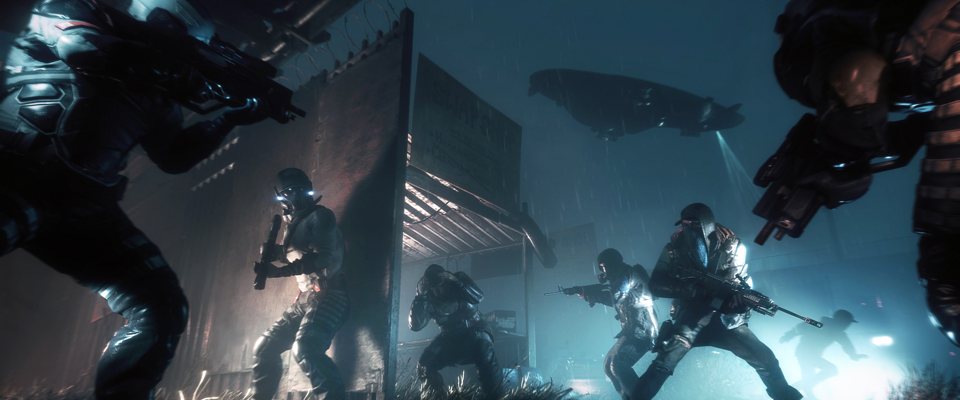
TSA: You’ve obviously got a lot of tools in the game to help you with combat, and you talk about combining Molotovs with the RC car, etc. But is there anything to help you with the more stealthy elements of it, so you can just avoid the patrols?
C.J.: What, you didn’t find the cloaking device?
TSA: [laughs]
C.J.: I’m sorry, that’s not real…
It’s not so much avoidance as it is skirting around a situation, so obviously the incendiary and the explosive half of that Guerrilla Toolkit is really spectacular and great for taking out groups of enemies or vehicles, but we also have the firecrackers, the hacking devices…
While not perfectly stealthy – firecrackers are obviously noise making devices! – when you encounter a sniper on a rooftop that’s covering a bit of street you want to cross, by throwing that firecracker in the opposite direction, you’ll attract their focus and create an opening for you to get across that road. It’s not a ghost playthrough, but it is the way you prevent your person from being spotted.
Those distraction devices work on a variety of different things, and again, as you experiment in the game, you’ll find that you can do a whole bunch of stuff that you didn’t expect to be able to do with them.
TSA: The weapon customisation feels like a really nice system from having a tinker with it in the demo, but how deep does it go? If seems like there’s a lot of options on each gun.
C.J.: I think that it’s a very, very robust system and you will have the tools tackle whatever situation in virtually whatever way you want when you’re confronted with it. So the example that I give, as I’m also someone that likes to play relatively stealthily and likes to engage from distance, for when I’m wandering around through buildings and out onto the street, I don’t really want to walk around with the high magnification scope on the weapon at all times. I want something that gives me peripheral awareness. So I will swap pretty liberally between the red dot and the 4x sight. […] At this point, it’s almost committed to muscle memory.
Additionally, we have the conversions as well, such as where you break the shotgun apart and put the incendiary launcher on, or when you take the assault rifle upper receiver off and put a limpet mine launcher on. It just expands you capabilities.
You don’t want them on all the time, because if you’ve got the limpet mine launcher on, it’s really effective against vehicles and drones, but not so good against individuals, but again, it’s not a huge hassle to switch back and forth between the two.

TSA: Going back to the open world, how reactive is the game to what you do? Because you’ve got the strike points that you claim as you go through, but are you going to see decreased North Korean presence there? Are they going to disappear completely like in Assassin’s Creed and there are suddenly no Templars, which always seems super weird?
C.J.: I’m glad you asked that. Actually, with your first answer, you’ve sort of answered your own question.
Those Strike Points are strategically important locations, and there are a variety of objective types that we have, but if you look at the ones in the demo, they make sense from a common sense perspective as well.
The one I like to give as an example is there is a condo complex that overlooks an intersection, a T junction, and it’s got snipers in it. Now, giving people an objective to go into a building and shoot a bunch of people is not outside of the norms of the genre, but once you’ve cleared those snipers out a couple of things will happen.
When you claim the Strike Point, you will see the actual level and architecture change around you, so your resistance fighters will move into the area, they’ll put up their own posters, spray paint over anything they don’t like, and they will use that area as a bit of a staging ground, with supplies and extra ammunition.
I will know when I walk down that street, I don’t have to worry about the snipers that were in those windows, but as you so aptly said, when you claim an area and suddenly the enemy never sets foot in it again, it feels a little weird. So what you are doing in Homefront: The Revolution is just creating a small pocket of the world that is easier for you to operate in, but still isn’t free.
So I will still encounter patrols that randomly drive around the world, but I don’t have to deal with the patrol and the sniper. I just have to deal with the patrol, but where those snipers previously were, I now have four people crouched in those windows so that when I give the signal, they will pop up and deal with this.
When they’re done with that, they’ll all run off and go do their own thing. All of the resistance fighters you see running around the street are tasked by the AI system independently from you. So they’ll go off and try to take a Strike Point on their own. They probably won’t succeed, but if you want to tag along with them, they’ll lead you right to it and you’ll have a bit more force moving in with you.
I actually just recently discovered that they won’t kick off engagements unless first fired upon or if you start shooting first. If you remain in stealth, they will follow you quietly until the engagement is kicked off. You don’t have to worry about the AI starting to shoot randomly and getting drawn into it, you get to call when you start.
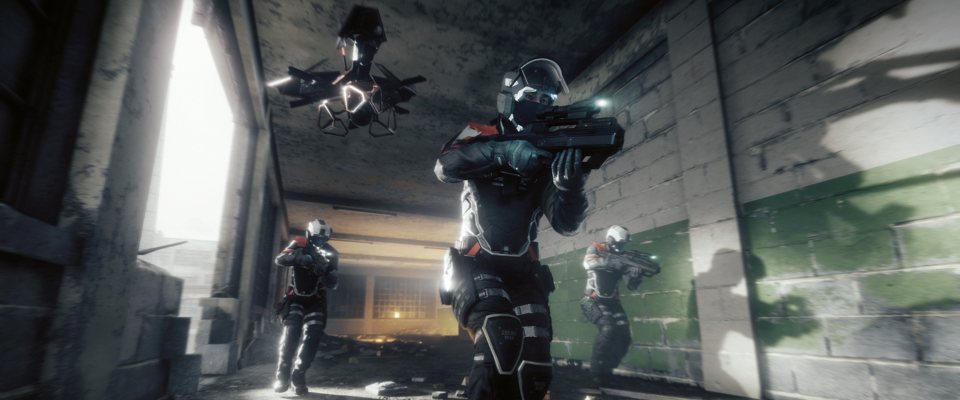
TSA: Can you tell us a little about the story that you’re working with here? Obviously, it’s going to be a continuation from the first game.
C.J.: It’s gone!
TSA: Oh, well you’re obviously in a different city now, so…
C.J.: It’s still all gone!
So this is another interesting and, I think, important distinction to make. The reason the game is not called Homefront 2 but is called Homefront: The Revolution is because not a direct sequel.
TSA: OK, but you’ve still got the story where the Korean invasion has happened…
C.J.: We’ve retained the Koreans as the antagonists, but the events surrounding the occupation and all the story and characters that are in the game are totally separate from the first one. We’ve rebooted the entire world.
So yeah, it’s not picking up where the first one left off. Part of that is because it’s a new team, a new gameplay style and a new publisher, and part of it is because the thing that brings people to Homefront is the premise of a fallen, occupied America, and the idea that you are placed in the shoes of a guerrilla fighter. By taking the game open world and by creating an all new lore and campaign story, it allows us to really leverage that to Dambuster’s own unique vision of what guerrilla warfare is, how it plays and what it should feel like, and not be beholden to what came before.
TSA: You also just touched upon some of the issues the game has had during development, where it’s moved around a lot and had a lot of uncertainty. How long have you been with it, yourself?
C.J.: I’ve been with it since June of this year, but I’ve obviously been following it for quite some time. I was one of the writers on the original and I’ve always advocated for and believed in the premise, and I said as much at the time when I left Kaos. I couldn’t wait to see what this team did with it.
It was a while ago, but the team that’s been working on Homefront: The Revolution has been the same team from the beginning, despite any changeovers. The development has continued and the people are still all the same ones that were there before. The interruptions have been a bit more magnified because of press scrutiny.
Thanks to C.J. for talking to us about the game for so long. Don’t forget to check out Stefan’s hands on from Gamescom as well, and we’ll have more on the game in future, as they aim for release next year.
gazzagb
Nice interview Kris. Did they let slip anything about a release date at all?
bigchrissyc
I played this at EGX, it was OK. Nothing amazing, the way the characters moved, the feel of the feedback from the weapons and aiming reminded me alot of Killzone, also I had to play this on an XboxOne so had no idea what buttons were what so that probably didnt help the overall experience.