

2016 has been a simply fantastic year for first person shooters. Not only that, it’s been fantastic for the single player campaigns, with developers pushing hard to create more involved and inventive experiences. Buckle up tight, because this is about to start spoiling some key moments of these games, even though I don’t explicitly say absolutely everything that happens.
Far Cry Primal, as an example from earlier this year, saw Ubisoft stepping back in time to recreate human languages from 10,000 years ago. Superhot manipulated time so that it only moved when you did, while Doom went back to its roots, so that stopping to think for a few moments too long likely meant you died instead.
Dealing with death has been a big theme for me over the last month. I don’t mean in real life, but in videogames and reviewing Battlefield 1, Titanfall 2 and Call of Duty: Infinite Warfare in quick succession. Each handles death in their own particular way, whether it’s a serious and sombre tone, an almost morbid fascination, or underscoring a certain playfulness to the game with a more heartfelt note and emotional attachment.
Last warning. Spoilers both major and minor lie ahead.
Battlefield 1’s approach in particular fascinates me. I spoke at length about the emotional impact that the game’s opening had for me – I still find it difficult to dwell on at times – as it really hammers home just how easily each and every soldier could die in the trenches of Belgium and France. However, the five stories that follow take a very different tone. Each follows a different protagonist and group of surrounding characters, and while I didn’t find them as deeply affecting as that mandatory introduction to the game, you can see death around every turn.
What DICE did quite excellently this time around is use each story, each distinct battle and theatre of war to twist things around and subvert expectations. When you hear T.E. Lawrence narrating your way through a stealthy single man assault on a derailed train, you expect it to be an internal monologue of sorts. In fact, Lawrence is narrating the actions of a female Bedouin rebel, as becomes clear during the level ending cutscene.
Similar subversive moments run throughout, so one story is narrated from years after the war, for example, but when the potential of death rears its head, the sense of desperation comes through. There’s the way that a battle hardened Aussie veteran refuses to let his underage charge face the dangers of war, despite his eagerness to do so, the futile search for a twin brother who’s almost assuredly dead, the dumb and meaningless promise to ensure that one character makes to another to bring them back alive. Sometimes it’s your character that dies, sometimes it’s a companion who you’ve been alongside through hell and back.
My favourite trick is when Battlefield 1 shrugs off the sombre tone for a fleeting moment of something a little more playful, more dastardly. An unreliable narrator reveals his hand in the last few moments of his story and makes you question everything that happened in the last hour or so. It’s a delightful wink to the camera making you realise how implausible some of what just happened was.

Death haunts Nick Reyes throughout Call of Duty: Infinite Warfare as well. Promoted as he is to Captain of the Retribution, the lives of all his crew are in his hands. He doesn’t deal with it well, to the point that he’s foolishly prepared to throw away the lives of others to save one man.
In stark contrast, you have Admiral Salen Kotch (Kit Harrington) as the main antagonist in the story. The first time you encounter him, it’s on the surface of Europa, as a small special forces team fails to recover the prototype weapon they were searching for. Kotch initially seems caring, almost, but there’s a dark undertone to his questioning that quickly descends into full-blown psychosis when he illustrates how far he’s willing to go, not by shooting one of the captured men, but one of his own soldiers.
The growth of Reyes’ character comes in trying to find a balance between the two, but ultimately, he fails to do so. It’s as if Kotch’s do and/or die trying mentality infects Reyes, leading to what amounts to little more than a suicide mission on the Settlement Defense Front on Mars.
Suddenly, characters are dying left right and centre. Quite a few of them feel hollow or like pastiches of cliché driven Hollywood blockbusters, yet some of them do hit pretty hard.
One moment in particular stands out for me, as Reyes and the small group of stranded Retribution personnel find themselves trapped trying and unable to take out the anti-air turrets. With no other option, he orders one of the few surviving Jackal pilots overhead to crash into the tower. It’s a moment that you can blink and miss, that you might not understand through the hail of gunfire, but it’s there and despite not knowing who that pilot is, it gave me pause for thought.
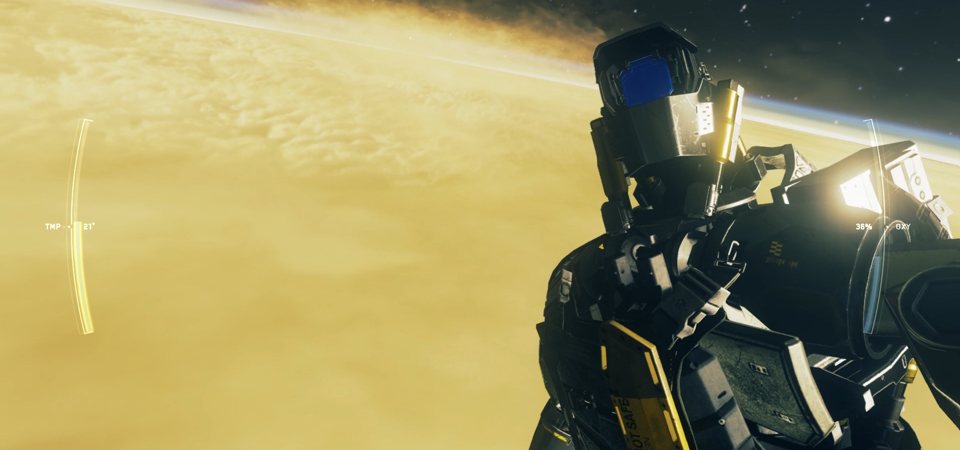
And then there’s ETH.3n, or “Ethan”, the lovable robot member of the squad. In truth, he’s basically written as though he were a human character, almost too human. There’s banter with other members of the main cast, whether it’s asking Salter a question he already knows the answer to simply because he likes the sound of her voice, or the way he wins over Omar’s trust off camera, in what I can only assume was a few hours of male bonding around a campfire in the Appalachian Mountains, or as close as you can get on a spacecraft carrier. He dies at the end – of course he does – and while entirely expected, it’s kind torturous the way it pans out.
An understated touch during the credits is the ability to listen to the pre-recorded messages of some of the crew members. You have messages to spouses, to parents, to children, and in among the rest is Ethan’s message to you. He’s a robot. He really doesn’t have anyone else.
Death isn’t quite so intrinsically interwoven into the narrative of Titanfall 2, but it’s still there, the eye rolling presumption that BT-7274 is going to die at the end. Respawn knew it, and so they have fun with the idea. In fact, they have fun with just about everything.

The gameplay here is exquisite, and while wall running and double jumping isn’t everyone’s idea of fun, you’re missing out on one hell of a FPS campaign if you don’t play Titanfall 2. Within an hour, you’re working your way through a cavernous factory beneath the planet’s surface, clambering across bizarre buildings being pre-fabricated, there’s an outstanding 30-odd minutes where you have the ability to manipulate time, another section where you lead an assault on a ship that’s trying to fly away. All of these and many more moments could so easily have been the climax to a campaign, but here they’re part of a breathless five hour sprint to the finish.
BT’s your loyal companion throughout, but he’s a very different kind of robot to Ethan. Where Ethan was effectively just a human in an ensemble cast, BT is clearly an AI. You pick dialogue options at various points to talk to him, but much like C-3PO, any wit and humour in his words and actions is unintentional from his point of view, he’s just stating the facts and doing what’s he’s programmed to.
What’s fascinating is that where I see the bonds of friendship, BT sees effectiveness ratings. Where I’m partly trying to keep BT safe in a fight because I like him, he has to follow his three programmed directives, one of which is to keep the pilot alive. When he tells me/Jack to trust him, I know I do.
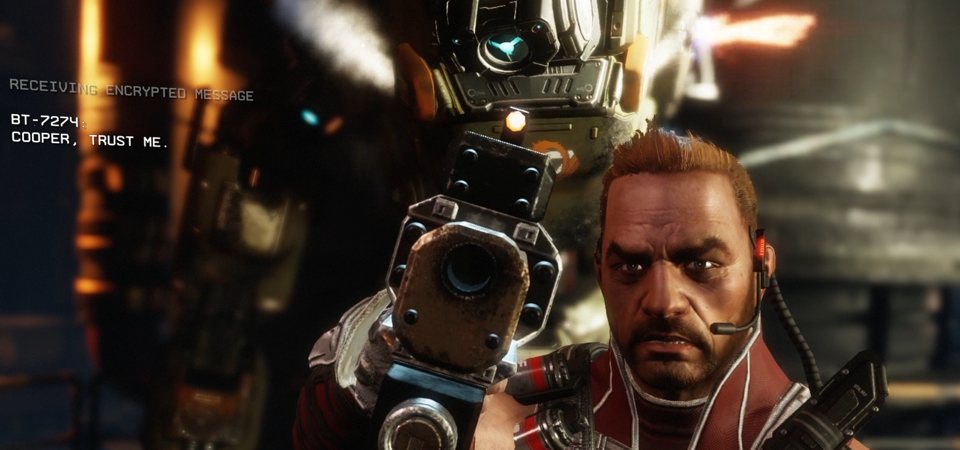
But again, just as with Ethan and exactly as you’d expect, he dies. Looking back, it’s not a moment that’s particularly emotional for me, but that’s because of Respawn knowing our expectations and deciding to toy with them. Yes, it’s a slightly sad moment, but just as in every other part of the campaign, Respawn click their fingers and it turns into a “Hell yes!” moment instead, followed by another, then another. BT’s demise, battered, broken and defeated, is not the end of this story. Not by a long shot.
First person shooters as a genre are all about killing, but it’s quite rare that they have you dealing with and facing up to death. Titanfall 2 is the most middle of the road of the three, but it’s also staggeringly well crafted and well aware of itself, but it’s fascinating to see how both Battlefield 1 and Infinite Warfare try to bring a certain maturity and a more sombre tone to what could easily just be another inconsequential action packed romp. They’re pushing to make their single player stories better and more meaningful, not just the multiplayer and the gameplay, and that’s great to see.



bunimomike
Your last paragraph nails it. Lovely to see a bit of maturity and evolution from such stalwarts.