

Breath of the Wild might be an easy and obvious contender for Game of the Year awards in December, but where the main game is a no brainer for Wii U and Switch owners, its first DLC pack is a less clear cut proposition. The Master Trials broadens the game in a few directions, adding more challenging modes, more outfits and gear that aids exploration, but it feels far from essential.
For those still finding new places to explore and things to discover as they play the game, the best additions are the Travel Medallion, Korok Mask and the Hero’s Path map mode in the Sheikah Slate.
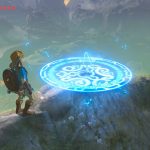
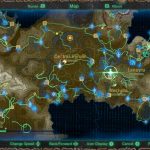
The medallion lets you create a temporary teleportation point wherever you’re stood, allowing you to nip back to a shop and stock up on arrows and cutting out some of the time journeying back, even if it’s from a nearby shrine. Meanwhile, the Korok Mask wiggles whenever you’re near any of the 900 Korok seeds out in the world and the Hero’s Path map shows up to 200 hours of play time on the map, letting you watch a replay of the path you’ve taken and showing you all the places you’re yet to explore.
Combined together, they can make exploring Hyrule quite a bit easier, but they also feel like they shouldn’t be included in the DLC pack. These are simple tools for players that could have been part of a free update to the game, or even integrated from day one. The Korok Mask in particular replicates a function of the Sheikah Slate’s scanner but for one specific collectable, which feels cheeky as heck.

Beyond the Korok Mask, there are other nice costumes added with the DLC – Majora’s Mask, Midna’s Helmet from Twilight Princess, and the Tingle onesie and Phantom Armour lifted from Wind Waker. They don’t do much new in comparison to armour sets already within the game, but are a series of nice homages for fans.
More significant and satisfying is the Trial of the Sword. Accessible once you’ve found the Master Sword, it takes the core idea behind Eventide Island (one of the best shrine challenges in the game) and runs with it. You’re stripped of all your items and dropped into an arena cut off from the rest of the world to try and tackle 42 floors of enemies. First it’s small groups of Bokoblin or Chuchus, but they get progressively more difficult while keeping the enemies quite varied from one wave to the next.

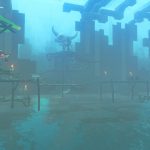
Thankfully, you do have moments of respite, with certain levels just there to let you recuperate, open a few chest of items as rewards, and cook up the food that you’ve found. The one hint I’ll give is to remember that you have the Sheikah Slate throughout, and to be wary of grouped enemies, as a badly thought out assault or letting the enemy get a few hits in can put you at a big disadvantage in terms of health for later waves.
It’s challenging, but nothing compared to the Master Mode difficulty. Running alongside the normal difficulty, so you gain a second save slot just for Master Mode, it takes the entire game and adjusts the difficulty across the board. All of the enemies in the game are at least one stage more difficult, and they’ve been spread out a little differently as well. Worse than that, if you’re not consistently dealing damage, they’ll start to heal, completely changing the dynamic of combat and forcing you to attack decisively instead of biding your time.
The first few encounters on The Great Plateau are horrible because of this, as you find yourself completely and utterly outmatched by the dark blue Bokoblin you face, while having to make do with the same lowly weapons you start with in normal difficulty. One on one fights take at least three times as long and demand that you know how to dodge and counter – even the first pair of archers you meet take an awful lot of damage – set pieces like pushing boulders down onto explosive barrels near enemy camps no longer kill, but merely damage them… and then the Bokoblin quickly start to heal. You really have to be wary of getting outnumbered at this early stage when you’re running around with just three hearts. Oh, and some sadist decided that the Plateau was the perfect place to put a white-maned Lynel!
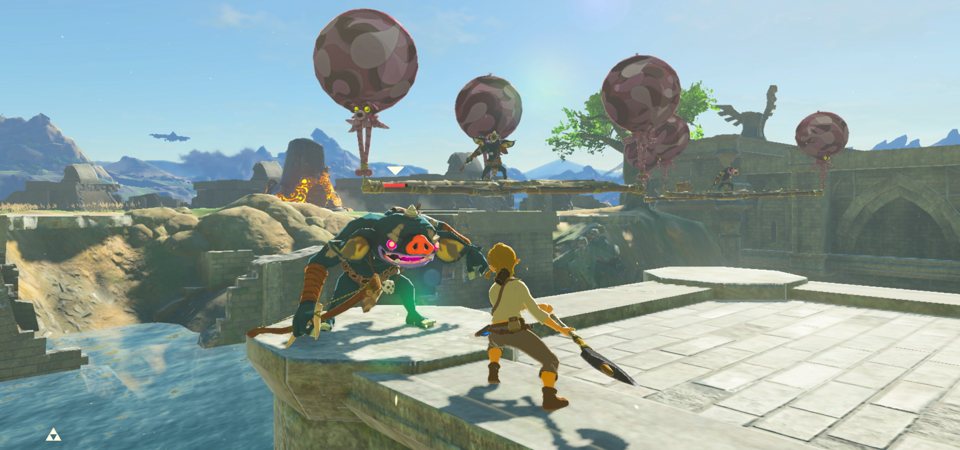
Thankfully, it doesn’t take long to get into the new groove and pick up better weapons, especially once you get down from the Plateau. You’ll be far more reliant on bow and arrow in combat, as they can deal a lot of damage from afar and keep enemies from healing, not to mention the archers up on platforms floating with Octorok balloons on their corners. These floating platforms can often have chests that hold vital rewards and resources though, giving you a few more opportunities to get important weapons.
The initial difficulty will likely subside as you tap into your memories from the original game, and it helps that shrines that don’t feature combat haven’t changed their puzzles. Even so, the opening hour or two are pretty intimidating and have the intended effect of changing how you play the game.
Sadly, it still all adds up to a DLC pack that feels underwhelming, especially in the context of previous DLC efforts from Nintendo. Mario Kart 8, for example, had two major track DLC packs for a very reasonable price, while things like 200cc were added for free, and Splatoon got new multiplayer maps for free. Breath of the Wild’s DLC has the added oddity of only being available in an Expansion Pass bundle, with this first pack being followed by The Champion’s Ballad this winter, which will delve deeper into the game’s story.
Even though it’s hard to not be disappointed by The Master Trials, it’s rekindled interest in Breath of the Wild, as evidenced by the number of people in my friends list returning to the game. It keeps the game in the forefront of people’s minds before the meatier expansion later this year.