
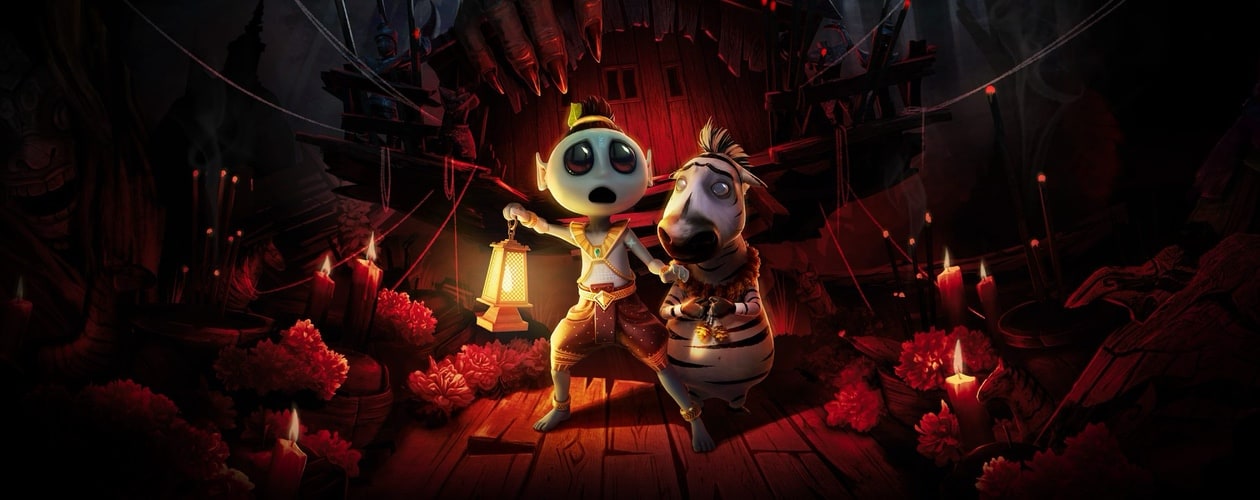

There is an immediate familiarity to Kumarn: The Wandering Spirit. The perspective, the vulnerable protagonist, the platforming and the enormous, horrifying creatures stalking your every move will all feel very familiar to fans of Little Nightmares, but then you start looking at what is actually happening around you, and Kumarn begins to establish an identity of its own.
This is a horror adventure steeped in Thai folklore, and that setting is easily its most interesting feature. In fact, the developer watching me play described Kumarn as the “Avengers of Thai ghosts”, which might sound like a strange comparison until you start encountering the game’s supernatural inhabitants. The various spirits and creatures give the game a cast of supernatural threats that feels considerably more distinctive than the usual collection of horror monsters.
You play as Kumarn, a young spirit who, alongside his loyal companion Zeb, finds himself wandering through a world where ancient Thai myths have become terrifyingly real. Forests, temples and abandoned locations are filled with spirits and creatures that want nothing more than to make your journey considerably more difficult. You’re not exactly equipped to fight them.
Kumarn is built around stealth, environmental puzzles and platforming, meaning that survival comes from being clever rather than powerful. When one of the game’s larger creatures appears, your first instinct isn’t to work out how to kill it, it’s to work out where you can hide.
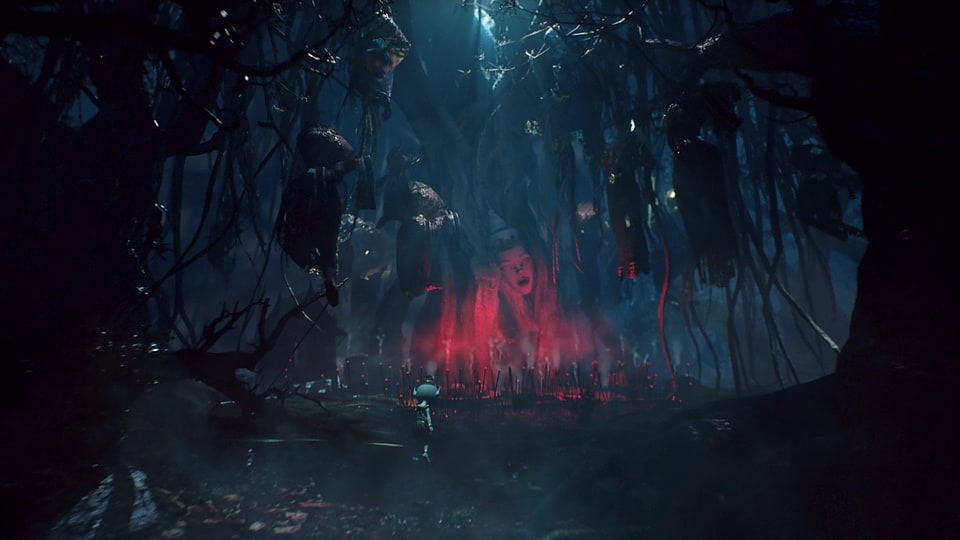
That creates a lovely sense of vulnerability, particularly when combined with the game’s platforming sections. There are plenty of moments where you need to rely on quick reflexes to make a jump, avoid a hazard or reach safety before something catches up with you.
The platforming itself felt intuitive, although some sections definitely demanded a little more precision. Kumarn can move between the foreground and background as you navigate the environment, which gives the world a little more depth than the traditional side-on perspective might suggest. It’s a small touch, but one I really enjoyed.
The game also gives Kumarn a sacred lamp that can be used to interact with the environment and create pathways to safety. This feeds into the environmental puzzles, giving you another tool to work with beyond simply hiding and running.
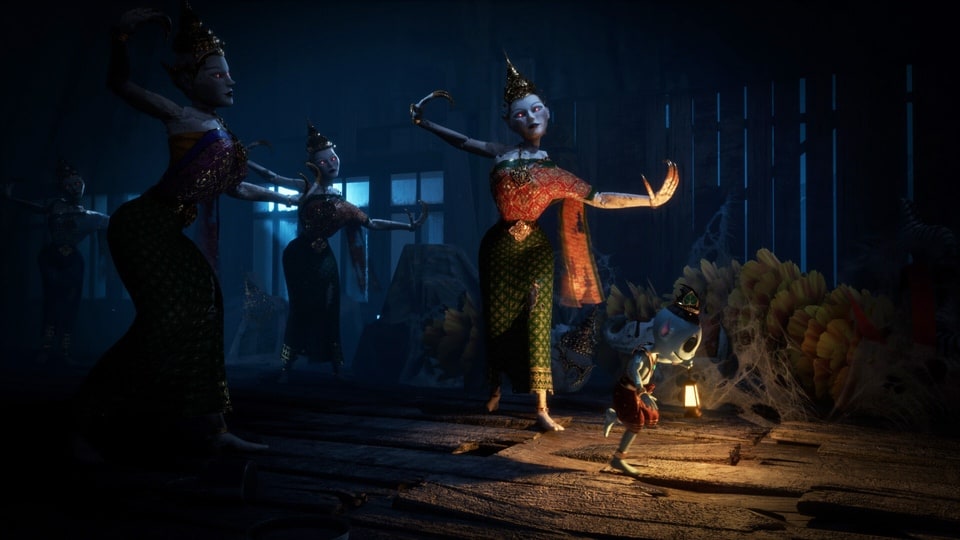
The demo kept the puzzles fairly straightforward, but they fit nicely into the rhythm of exploration. You’re moving through an environment, figuring out where you need to go, finding a way past whatever is blocking your route and trying not to attract the attention of whatever happens to be hunting you.
It’s a formula we’ve seen before, but Kumarn’s setting gives it a welcome twist. Rather than another generic haunted forest populated by creatures we’ve seen countless times, the game draws directly from Thai mythology and folklore. The spirits you encounter aren’t simply monsters designed to look frightening; they’re based on stories and legends, with the game promising to explore their individual histories and supernatural abilities.
That gives Kumarn a chance to introduce something genuinely different to a genre that has become increasingly crowded. And then there’s Zeb.
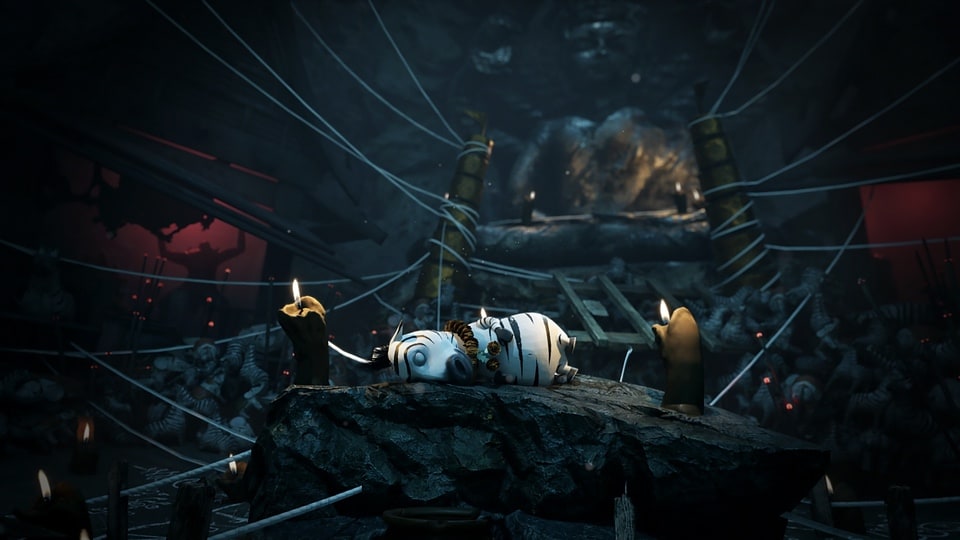
A chunky little zebra companion might not be the first thing you’d expect to see in a horror game, but he’s an incredibly charming addition to what could otherwise be a relentlessly bleak experience. That contrast is important. Kumarn looks frightening, but there’s also a sense of wonder and warmth running through it. You’re not simply trying to survive a series of horror set pieces; you’re on a journey, and having Zeb alongside you gives the adventure an emotional core.
I only had a short time with Kumarn: The Wandering Spirit at Gamescom, so there are still plenty of questions surrounding how its puzzles, platforming and stealth will develop over the course of the full game.
But what I played left a very positive impression. It may wear its Little Nightmares influences on its sleeve, but that’s not necessarily a bad thing. The formula works, and WereBuff Studio is using it as the foundation for something that feels distinctly Thai.
Kumarn: The Wandering Spirit is charming, creepy and occasionally pretty tense, with enough personality to make me want to see where the journey goes next.
