
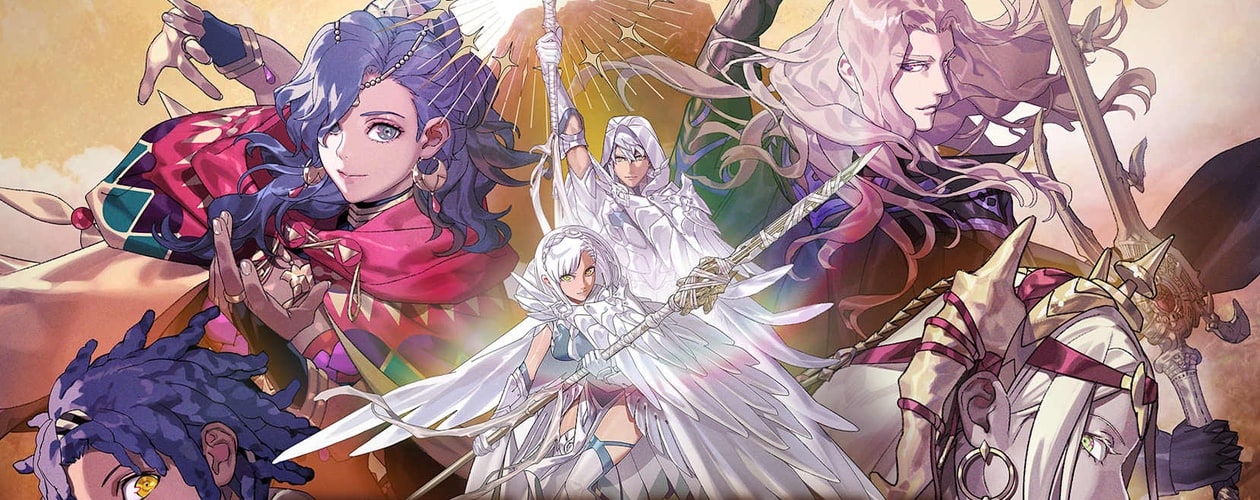

In the pantheon of Nintendo’s premier franchises, Fire Emblem is their god of strategy RPGs. Starting out on the 8-Bit Nintendo Entertainment System, Intelligent Systems took a simple grid layout, laid fields, towns and hillsides across it, and set a host of weapon-wielding soldiers across it, recreating battles with tactical depth and strategy, despite the basic visuals. Fundamentally, that’s still the case today, but in Fire Emblem: Fortune’s Weave, they’ve extended that template to its logical conclusion, forging a gorgeous fantasy epic that travels through time, features multiple intriguing protagonists, and tightens the strategic action further than ever before.
Fortune’s Weave is set in the Dagdan Empire, sharing in its history and timeline with Fire Emblem: Three Houses neighbouring continent of Fódlan. The nation is overseen by Dagda himself, with the central narrative pivoting on the Heroic Games to which he’s invited warriors from across the continent. While that forms the backdrop that brings our four protagonists together, there’s a wider tale, with your created avatar having travelled back in time to this point to prevent the rise of the Demon God, Balor. You’re tasked with protecting the four heroes, the Fire Lords, and nurturing them, so that they’re ready to face the ultimate evil. Oh, and you’re turned into a bird, just to make things a little trickier.
That’s only the first of a series of differences that make Fortune’s Weave feel unlike any of the other Fire Emblem games, while still retaining the bedrock of tactical action and relationship building of its forebears.
You can experience the narrative from four different perspectives, with Cai, Dietrich, Theodora and Leda each boasting their own storyline. Instead of having to choose a storyline, you can move back and forth between all four by visiting the bird perch, and as you progress, the individual stories touch against each of the others, forging a dense, intertwined narrative. I think you’re likely to imprint on your first choice – to me, Fortune’s Weave is Theodora’s story – but each of the characters is unique, their different perspectives making for a tale that feels truly epic.
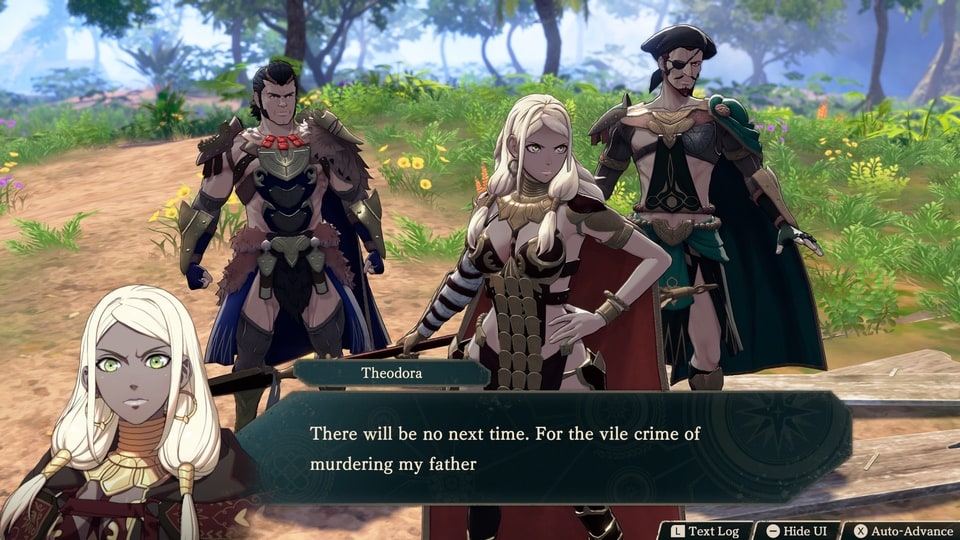
Tonally, they’re each different: Cai’s emotional past sits at odds with some of his lighter, more youthful hijinks and his ‘Kindness Quests’, Leda’s path of revenge is darker, cold and considered, while Theodora’s tale of familial betrayal, curses and the problems that come from being the ruler of a nation feels more grounded, albeit revolving around acquiring a magical arm.
The island city of Dagsion and the huge, explorable kingdom of the Dagdan Empire help to take that further. Dagsion is an open hub, the biggest that the series has ever seen, and it pushes the Switch 2 to its limit in terms of scale while retaining the visual fidelity found throughout. Contained within its walls, there are side quests to find, myriad merchants, and an array of party members to recruit before you even start on the character development side of things.

That progression and growth form the most crucial part of Fire Emblem: Fortune’s Weave’s gameplay loop. You start with base characters, and as they fight, they become more adept in their selected class. Fortune’s Weave introduces a few new classes to the mix, including the Ornius Rider – a fast-moving cavalry unit on a giant bird – and the very cool Charioteer class, which can run enemies over while you pepper them with arrows. Whichever route you take, you can level up your character’s mastery and abilities, switching and swapping to give them a real mix of different skills.
You can, and will, spend absolutely forever perfecting these classes, tweaking and changing your character loadout and exploring their abilities. Many of the recruitable characters then have additional penchants and specialities that become unlocked as they level up. Sophie, a mage you meet early on, can gain the ability to heal teammates at additional range, making it sensible to follow the white magic with her, but you can absolutely turn her into an archer if you were so inclined. There’s a deep well to lose yourself down, and I’ve loved every moment of it.
Part of that is down to the characterisation. There’s a wealth of characters to chat to, chat up, and recruit to your party, and they’re a varied and unique bunch, each with likes, dislikes, and backstories to discover. That’s further tied into the support scheme, with units that fight, eat and train together, becoming more effective on the battlefield. Once again, you can spend far too many hours just getting your party to know each other, and it’s all time well spent, gaining insight into each and every one of them.
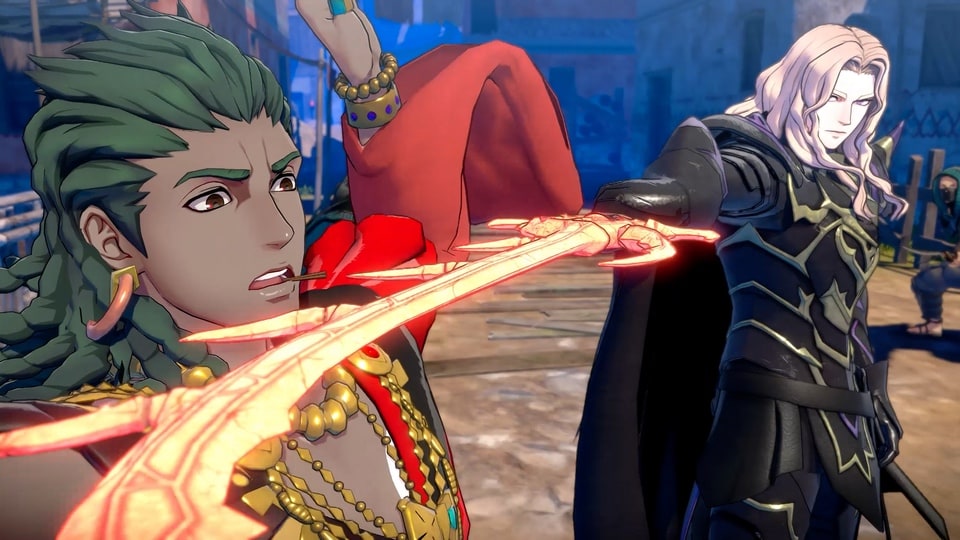
The game as a whole looks fantastic. Fortune Weave’s anime-esque art direction is overwhelmingly good-looking, especially during the action-packed, fully-voiced cutscenes, and there’s a level of detail and scale here that simply wouldn’t have been possible on the original Switch. There are some caveats to that, and Fortune’s Weave definitely pushes at the edges of the Switch 2’s power, particularly when you’re running around the city of Dagda, or exploring dungeons out in the world. Even with some visual concessions – NPCs are less detailed, and the world as a whole can be fairly simplistic at times – the frame rate still fluctuates here and there.
As with previous Fire Emblem games, it’s something you can live with, not least because the tactical battles are unaffected, but you might have been hoping for a Fire Emblem that sets aside some of the performance quibbles of the past. Unfortunately, that’s not the case, but at no point did it detract from playing the game.
It’s almost perfunctory to talk about the tactical combat at this stage. Intelligent Systems are truly the masters of this type of strategy, stemming from their earliest days working on Advance Wars and the original Fire Emblem titles, through to the modern iteration of Fire Emblem as it is now, with the level of world-building, storytelling and characterisation that we’ve come to expect. You need tactical thought, consideration and planning, especially as the maps and encounters grow ever larger.
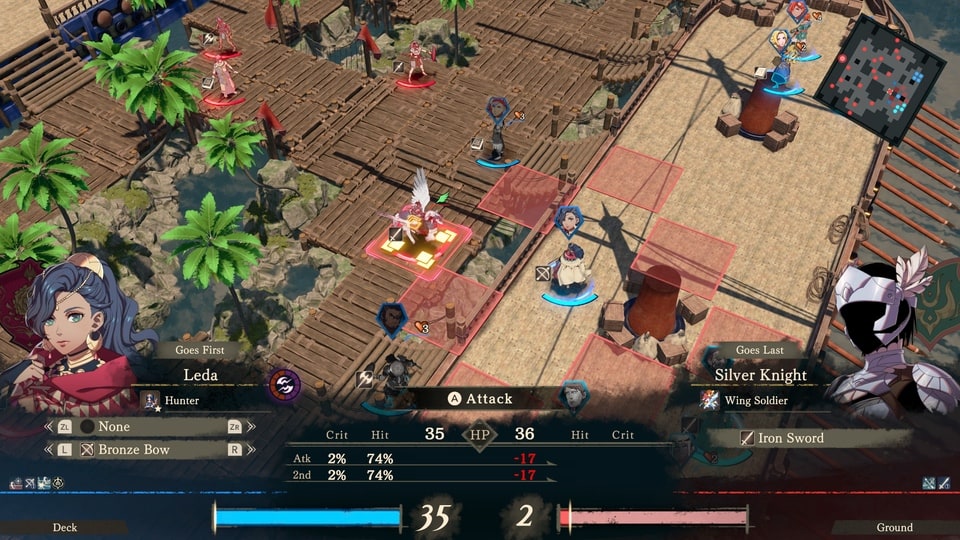
There’s new third-person dungeon exploration – harkening back to Fire Emblem: Shadows of Valentia – which helps to mix up the action, though the ability to set battles to play out themselves can feel inconsequential. Still, that’s optional, and a spot of dungeon crawling and loot grabbing can net you some handy treasure, ready for the next mainline battle.
The map of Dagda slowly expands, revealing new dungeons, skirmishes, routes and points of interest. Time is an ever-present consideration through Fortune’s Weave, and you have to balance exploring and expanding the map with your other training and side quests, all while the date of your next battle or major event ticks down. It can be hard to judge, both in game terms and real-world terms, how to spend your time, but there’s a constant sense of forward motion.
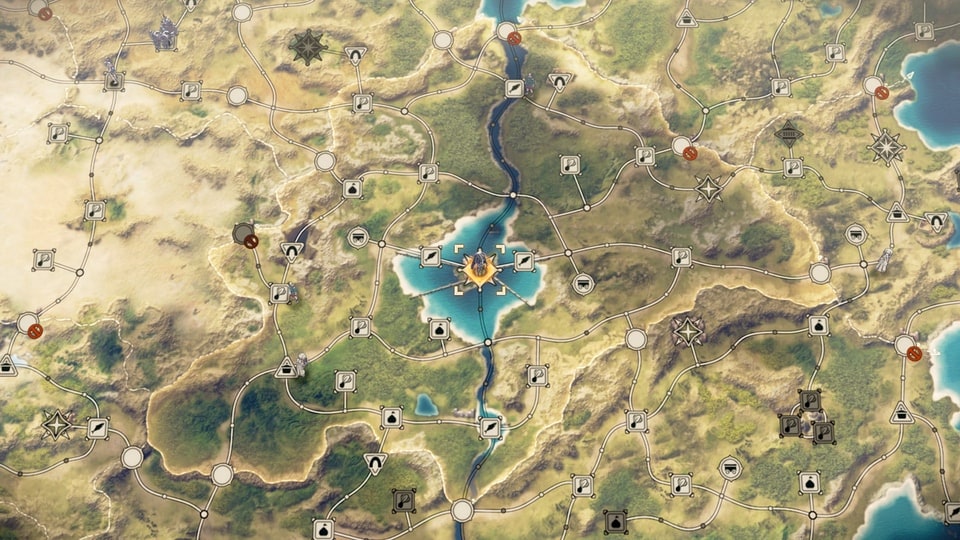
You can advance through these sections, with some requisite rewards and experience doled out for any time you do choose to wish away, but you’re definitely missing out on the wider picture, especially when it comes to earning renown and recruiting new warriors to your party. The only slightly painful thing is the way you move across the map, being forced to traverse it in single, fairly small distances. I imagine it’s to make sure you’re maximising your time, searching for treasures and materials, or finding the pathways to new routes, but it can be a real pain when you just want to head straight to your quest marker.
The Switch 2’s special abilities include the addition of a mouse mode to Fire Emblem: Fortune’s Weave, and I think if you’re arriving as a newcomer, it’s a very natural and well-implemented way to play the game, moving and clicking units into place with the right Joy-Con 2. However, if you’re carrying multiple decades of Fire Emblem muscle memory, and the gameplay grid has been a constant companion through your life, the mouse mode is only going to slow you down. When Fortune’s Weave is as expansive as it is, you really don’t need that.