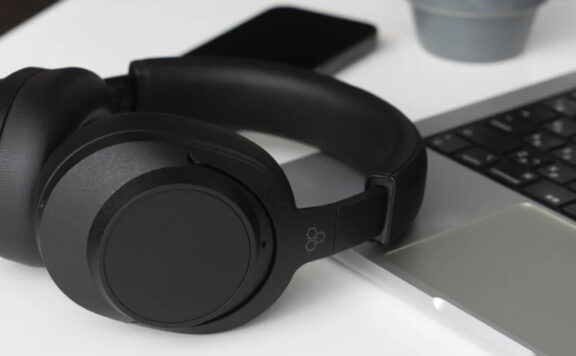

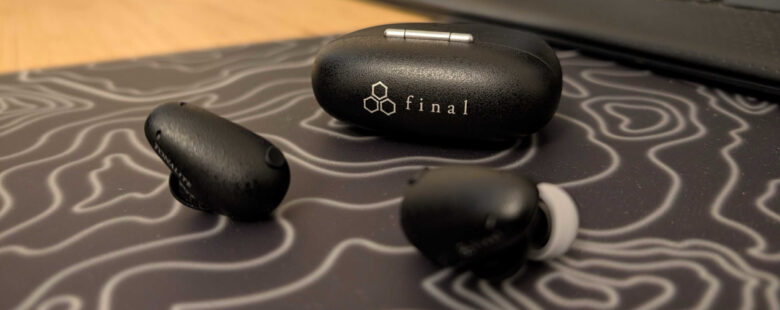
If you’ve been paying attention, you’ll know that there are other audio manufacturers beyond the Sonys, Steelserieses and Turtle Beaches of this world. Final have quietly been building a head of steam here, with a legacy that stretches back to the 80s, and which stands on precise, exacting, detailed audio. The Final Tonalite earbuds are the latest from the Japanese company, and they bear all the hallmarks of another quality product, with a few caveats.
The Final Tonalite are ANC-equipped, wireless earbuds, featuring Bluetooth 6.0 and the high-resolution LDAC codec to ensure that they are amongst the most precise and low-latency wireless earbuds on the market, assuming that you have the right kind of tech to get the best out of them.
That’s not the Tonalite’s party trick though. Using a scan of your ear, and a series of listening tests, the Tonalite creates a 3D audio profile that’s tuned to your own ears, and which is designed to give you a listening experience well beyond what you’ll get from other earbuds in this price range. This tech – DTAS for Personalized Timbre – is the reason you might be swayed from one of the household brand names, and if the best audio experience is what you’re looking for, Final have certainly made a very compelling case.
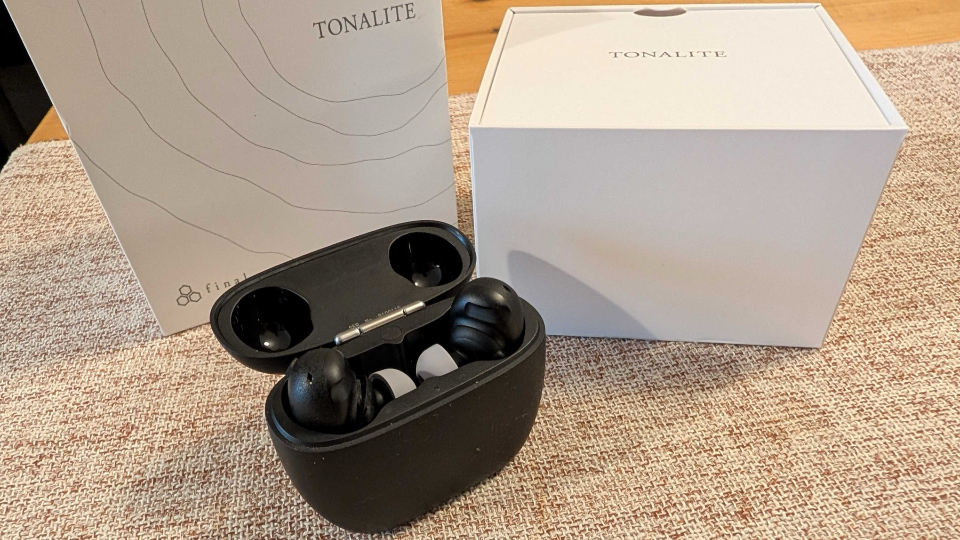
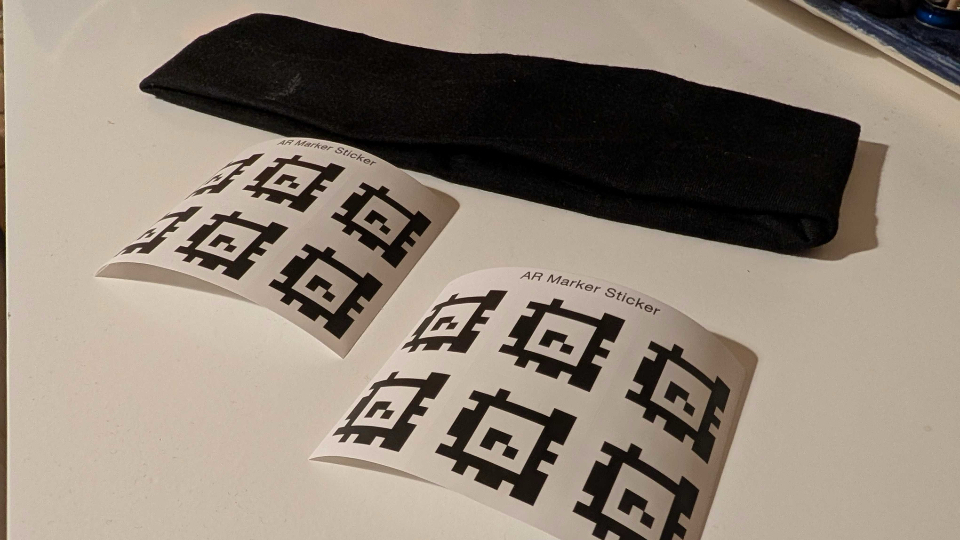
In the box, then, you’re getting the Tonalite earbuds and a textrued black charging case for them to sit in, alongside a batch of variously sized ear tips and silicone adjustment rings. Importantly, there’s also a fabric headband and AR marker stickers for scanning your head, which absolutely goes above and beyond any other audio product I’ve encountered that utilises some form of head or ear scanning.
The DTAS scanning takes about 15-20 minutes, and involves you using your mobile phone’s camera to take a series of pictures of your head and ears to create a 3D model of your upper body. The Tonalite app then sends those images up into the cloud, sits that model in a virtual environment, and fires sound at it to realistically map how your body experiences sound. Or, at least, that’s how I understood it.
The real-world experience of this is my wife laughing at me for wearing a headband with AR stickers on, before worrying that my head mapping was being uploaded to help create Skynet. To be fair, if the outcome of the Terminator was that he wanted you to experience music really well, I’d be more on board with the whole thing.
Where things get interesting is in the outcome. There is a clear, definitive improvement in the audio that the Tonalite puts out with a completed DTAS profile, compared to without.
This is not a mild uplift; it’s a conspicuous alteration to the quality of the audio you’re receiving. It’s the kind of quality that slowly causes an inane grin to stretch between each cheek, and which lets you hear elements and tones that you’re not getting from other earbuds, headsets or headphones.
Checking out Shelved First Attempt – the new release from Ben Folds Five – and an alternate recording of their iconic Underground from their debut album, you’re able to truly differentiate the vocal delivery, and the subtle changes from the well-worn original version I’ve listened to a thousand times before.
Opting for something more atmospheric, I returned to Billie Eilish’s exceptional Bond anthem, No Time to Die, which felt as though it was seeping into my body through my ears, so enveloping was the audio. The orchestral swells had real definition while Eilish’s vocals cut across them with crystal-like dynamism. I love this song, and the Tonalite still found new details and colour to make for a fresh and invigorating listening experience.
It is the quality and the definition of the Tonalite’s audio that is truly remarkable. Once you’ve created your personal profile, the sharper top end tones gain a more natural, but no less distinct quality. The bass is somewhat reliant on making sure that you’ve got the seal right, and the correct eartips in, but when you do have the right one selected, the low end tones are defined, rounded and full, without becoming flabby or overwhelming.
The ANC is similarly high quality, successfully blocking out road noise while walking, and background household sounds at home. Final have opted for a Sony chip here, and you can tell, with a degree of noise cancellation that approaches that in Sony’s own earbuds and headphones.
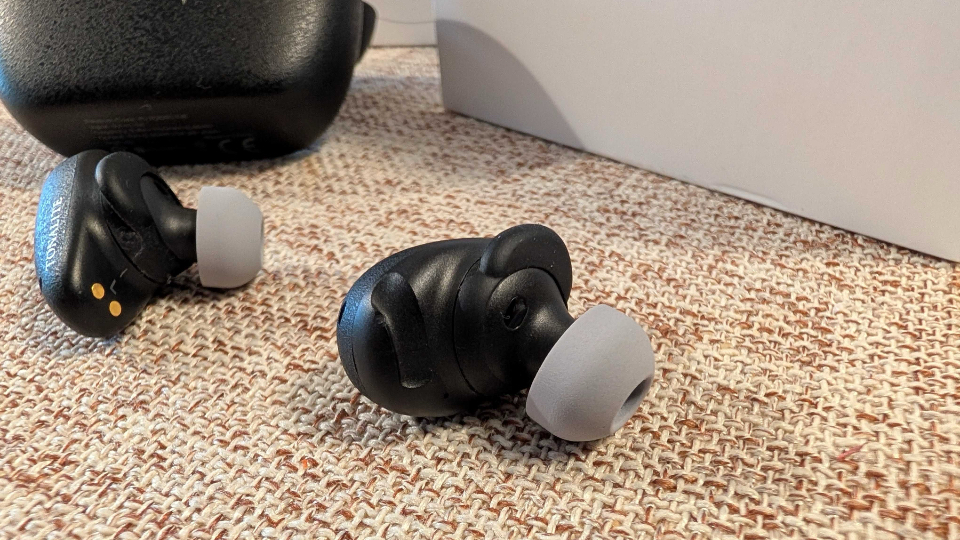
They sound amazing, then, but the build quality and looks are a bit of a mixed bag. The case is a step larger than your AirPods Pro, more in line with the older Sony WF-1000XM4, but it feels solid and boasts a nice magnetic lock for the earbuds when you place them inside. There’s four LEDs down the side to indicate the charge level, and you can get up to 27 hours of listening time with it. I did find that the rubber adjustment rings can rotate on the earbuds too, and if they do, the lid can’t close properly, which is sure to be a persistent annoyance.
The earbuds themselves can last up to 9 hours from a single charge, but that drops down if you’ve got the personalised DTAS sound and noise cancelling enabled. I got between 6 and 7 hours as an average, which is totally acceptable, but it is behind rivals like the AirPods Pro 3 and the Sony WF-1000XM6, which will last up to 8 hours with ANC.
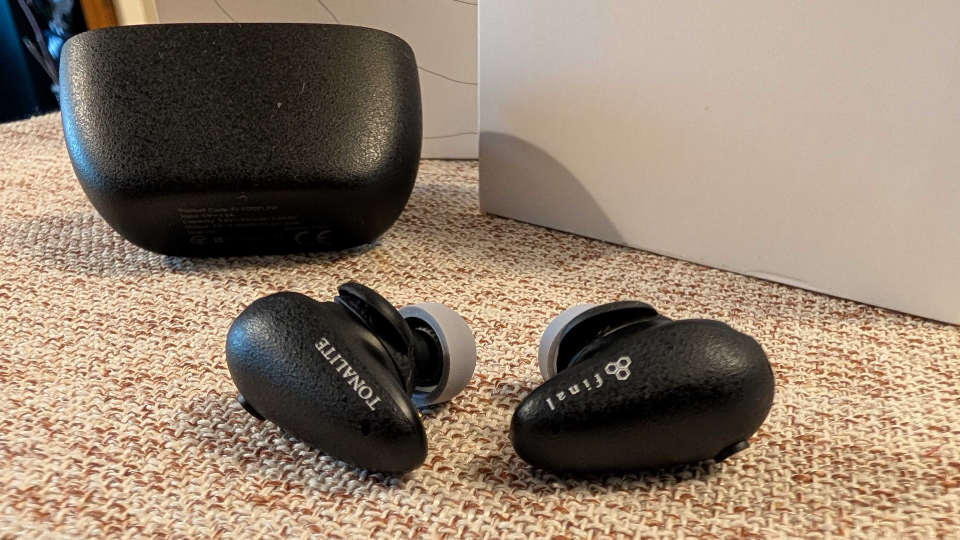
I’m not totally sold on the look of the Tonalite, either. They’re bulbous, with a textured black finish and silver Final and Tonalite logos across each earbud. Paired with their grey silicone eartips, they just don’t quite look or feel as premium as you’d hope for a pair of flagship £300 wireless earbuds.
They also have a single touchpoint on each bud, which I found too easy to accidentally activate when readjusting their position. I’ve never been a fan of multi-touch control for volume, and with the size of the body, it feels as though they could have featured swipe controls instead.
-
- Tonalite app page 1
-

- Tonalite app generating DTAS profile
There are some nagging oddities to dealing with the Tonalite beyond the mildly bizarre sensation of the headband and selfie combo. Things like having to activate LDAC in the app settings, rather than automatically choosing the best connection type; it’s also a touch temperamental about connecting to the app, and using the EQ profile you’ve selected. Still, when the sound is as good as this, you’ll be willing to forgive some minor demeanours.