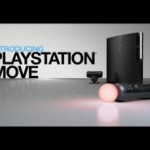
 The man in charge of Sony’s Worldwide Studios, Shuhei Yoshida, has spoken candidly about PlayStation Move. In an interview with Edge (issue 214), Yoshida discusses the technology, the inspiration and, of course, Natal. Naturally, we want you to buy the magazine to get the full interview, but it’s worth pointing out some of the best bits for discussion.
Surprisingly, the PlayStation Move presentation seen at GDC had been in preparation since E3 last year. “We were hoping we could have it at the last TGS [Tokyo Game Show],” said Yoshida, “but we felt that it needed a little bit more polish.” The Move was shown behind closed doors last year, though, so it’s interesting that nothing was leaked until right before the show.
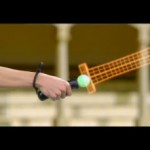
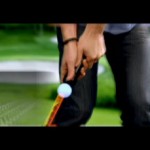
Yoshida says that the initial units weren’t up to scratch. “There were long lists of issues on the early hardware,” he says. “Many different teams were testing the hardware for different purposes.” The inspiration was more straightforward, though. “The sphere was the key,” says Yoshida. And the controller itself “had to have a shape that fits in the hand and not be easily thrown.”
Challenges faced by the studio included precision, reliability and responsiveness. “We want to make you feel like you’re inside the game and holding something that’s in the game, not a controller,” said Yoshida. He relates Natal to something akin to the Eyetoy, so “a two year old to an 80-year old can play games,” he says, going on to mention the limitations of making games without a controller.
The sensors inside the Move are more advanced than the Sixaxis ones, confirms Yoshida, but says that the biggest advantage of Move is the precision, not just movement but 3D spatial recognition and orientation, and suggests that it’s this that will set Sony’s tech apart from the competition. “We don’t know about Natal yet,” he says.
Elsewhere, the article discusses the controllers themselves, suggesting the central ‘action’ button is a leftover from the Arc codename, and mentions the fact that the face buttons on the Move and the Sub Controller are much smaller than they are on traditional controllers. The excellent coverage of PlayStation Move stretches to ten pages, and is well worth reading when the magazine hits the shelves.