

Subscriptions aren’t exactly a recent phenomenon within the video game industry, yet nowadays very few of us can get away without having to pay a regular fee. Many current-gen gamers will know this all too well thanks to PlayStation Plus and Xbox Live, both of which are mandatory in order to play multiplayer titles online. Thankfully, both Sony and Microsoft have lightened the financial burden somewhat, wheeling out a healthy spread of free downloads. These are often hand picked from an archive of full blown classics as well as the ever-rotating indie circuit.
Long before these online services came to life, however, there were still plenty of us throwing small sums of money at companies just to get our gaming fix. A little more than a decade ago, just before the free-to-play explosion, big names like Sony Online Entertainment, and Blizzard were raking it in. At the time, if you desperately wanted to play an MMO, you would need to spot ten pounds a month just to keep these colossal games up and running.
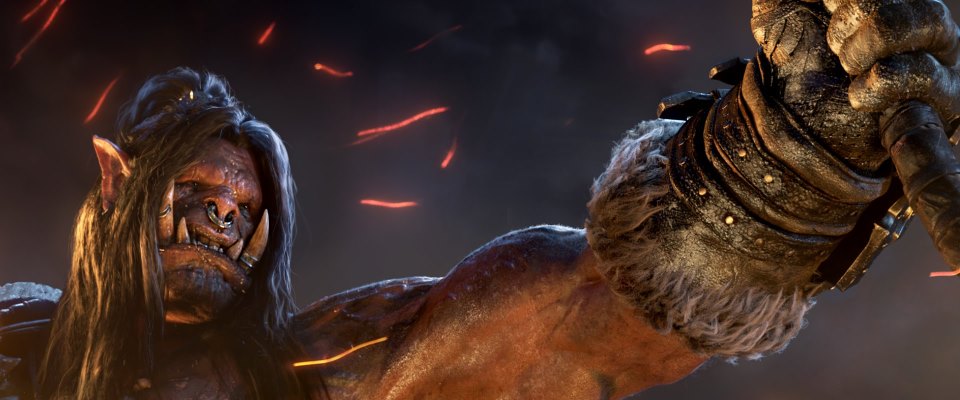
Of course, there are many that still follow this same subscription-based model. Although well past its prime, World of Warcraft continues to enjoy a thriving player base, as does the mind-boggling multiplayer space sim, EVE Online. These two, as well as a handful of others, are widely seen as anomalies in the contemporary MMO landscape. With such strong foundations, they managed to stand firm against the incoming wave of free-to-play alternatives. Many of their competitors weren’t so lucky, however. Over the past several years we’ve seen many iconic MMOs put out to pasture, or “sunset” as pundits like to say.
If released, say, five years ago, chance are, Destiny could have been propped up using a similar monthly payment scheme, just as The Elder Scrolls Online did initially on PC, before switching models ahead of the console launch. Instead, as Tef explains, Bungie and Bethesda have adopted a different approach. Much like traditional MMOs, both Destiny and TESO will receive numerous updates and expansions, but they’re being added in a fashion more akin to standard DLC that we see elsewhere.
Elsewhere within the gaming industry, we’ve seen other companies try to experiment with monthly subscriptions. Some of you may remember OnLive, an ambitious streaming service that shut down only a few months ago. By downloading the OnLive client, or picking up one of the slick black and orange micro consoles, punters could play some of their favourite hits without having to insert a disc or eat up space on their harddrives.
Needless to say, the service didn’t really take off. Although there was certainly plenty of buzz surrounding its debut, OnLive was delivered prematurely into a world where internet speeds were considerably slower than they are now. Its spirit continues to live on however, with Sony having bought up the OnLive patents while also absorbing Gaikai into its PlayStation Now service.
Sporting the exact same premise, Playstation Now enables its members to stream dozens of games from the publisher’s vast catalogue. Still, as we’ve seen and heard over the past year, the service is far from perfect. Many users are complaining of poor performance while others have been vocal in regards to Sony’s pricing. However, as Kris points out, if they manage to reel the costs in somewhat then PlayStation Now could be the next Spotify or Netflix.

EA has also been experimenting with subscriptions through its Access programme. Sign up, pay the fee, and you’ll be entitled to a number of perks including exclusive trials and a permanent ten percent discount on all digital EA titles. Although some, like myself, may not see the value, Dom is currently a member and says he is definitely getting his money’s worth.
“EA Access in particular has been very generous, and the trade in value of the games they’ve put in the vault has more than covered the yearly subscription. Add in the 10% discount off all EA digital products, and the early access to games and I feel like a happy subscriber.”
Another intriguing example is the way in which Activision and Freestyle Games plan on handling added content for Guitar Hero Live. As some of you will have heard, the rhythmic reboot features a new mode that lets you play whatever bonus tracks happen to crop up on the game’s GH Live playlist. If there’s a specific track you’re after, however, you can use tokens (earned both in-game and using cash) or buy a temporary subscription that opens the entire catalogue. It’s similar to models we’ve seen in a handful of other games, as well as the numerous karaoke rental serviced dotted around the web. For some like me, who will no doubt play Guitar Hero on-and-off whenever I have friend around, it’s an ideal solution yet others have been quick to say otherwise.
It’s clear that subscription business models have shifted over the last decade or so, but is this a good thing? It’s time for you to weigh in with your thoughts and opinions in the comments below, and let us know how you feel about games with a subscription and the various services that have sprung up over the last few years.




ron_mcphatty
Apart from Plus I’ve never paid for a games subscription and apart from having Sky for the last few years I’ve never had an entertainment subscription of any sort either. I think there is a good balance of rentable, subscribable and purchasable games around, I prefer buying because I don’t play enough to get good monies worth every month but I have seen friends get incredible value for money from their Eve and WoW subs. I try to play with my Vita and PS4 equally and enjoy indie games, I quite like the Plus freebies and think that sub is great value for money. A fee to pay online was a bit of a sour point to start with but it seems fine now, there are a good number of extra features that we didn’t have on the PS3, the downtime doesn’t bother me so much. I wouldn’t pay for Steam if it introduced a subscription, just because I wouldn’t use it enough, but they seem to maintain such a good standard that I wouldn’t blame them if they did!
gazzagb
I hate subscriptions because everyone’s perception of value is different, and user’s needs vary. I tried PS+ for 3 months and found it poor value (yes, it was only a tenner), but having to pay that just to play online didn’t seem worth it to me, and I think I’ve only downloaded one game too.
The only subscription service that is worth it for me is Spotify, for a fiver a month I more than get my moneys worth out of it listening to it on the tube, in work, and at home. When Top Gear starts on Amazon, I’m sure I’ll get a Prime membership as that offers loads of value (TV, Music, delivery etc).
ron_mcphatty
My wife spends enough on Kindle alone to make the Prime sub worth buying! It does seem good, it’s just a shame that you need Sky, Netflix and Prime in order not to miss out.
cam_manutd
Subscription based games have to be good value for money and offer something really different. Final Fantasy 14, the only game I have laid the odd subscription fee for is one of those. Its classic Final Fantasy plus its an MMO with cross play between PS3/PS4 and PC players all the while it can be remotely played on the PS Vita/Vita TV.
World of warcraft is a much older game though now and as the staple of the MMO pay p/m to play structure, its player base is dwindling. Elder scrolls online was initially a poor MMO but being a retail game changes the whole dynamic.
I don’t mind laying down a fee if its going to be worthwhile. I wish more games would add a lifetime fee. Even if it was £100, it would be worth it in FF14’s case.
Free to play games are like the opposite to subscription games. Get a base game and buy all the add ons that come with it the value of the money spent could be ridiculous (Blacklight and Planetside 2).
Starman
I don’t mind subscriptions as long as I feel it’s worth the cost. I’m happy paying for xbox live as the network is good and there’s usually a game every month that I’ll play for a while.
Nocure-fd
Its not the DLC as an alternative to a subscription that bothers me. The worrying trend which Destiny has started is that the new content makes the old content unplayable. Pretty much forcing you into buying any expansions if you don’t want your initial purchase to become unusable.
At least with the older model of MMOs, any extra content (hell even the original out of the box game) is still playable and relevant even after many expansions/years down the line.
Lieutenant Fatman
Some of these are just price gouging, big Publishers seeing if they can get away with it and if customers will put up with it and pay much more than the actual content warrants.
If the games in question really did deliver that much more, then I could definitely see an argument for paying a much higher price than the average game. But they don’t.
If you love Destiny or Lego, etc enough and want to pay to stay in the game then that’s fair enough. I totally get that. But you’re still being ripped off.