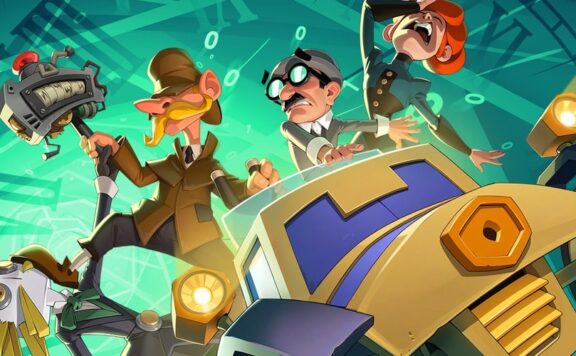
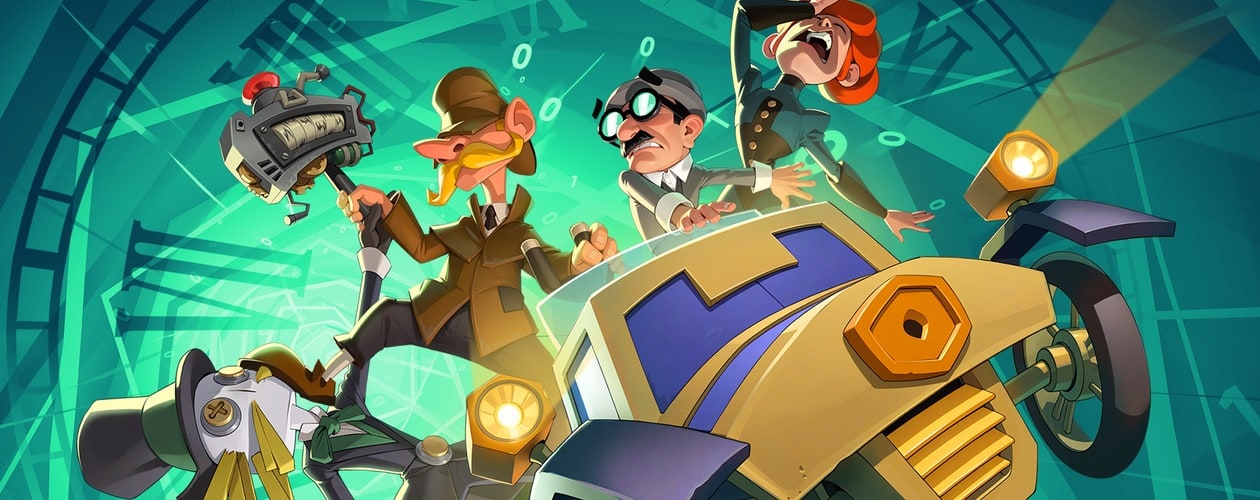

The team at Draw Me A Pixel can’t catch a break, it seems. After releasing a game in which There Is No Game, their second project is now about to launch in such a bad state that you have to actively fix its broken alphas, rescue its borderline offensive interpretations of British icons Sherlock Holmes and Dr. Watson, and figure out how to play a point & click without pointing at and clicking on things.
To answer for Crushed in Time’s clear game production disaster, Freddi Malavasi, Associate Producer and Communication Manager, was brave enough to face our questions.
TSA – Is it tough as a development team to have not failed to ship a finished game yet again? Are you hoping for third time lucky with your next game after Crushed in Time?
Freddi – Huh? What? What game? Are we supposed to be developing a video game? Why doesn’t anyone ever tell me anything?
TSA – How many elastic bands have you had to buy (and presumably break) to research for the elasticity of Crushed in Time? Or was it just messing around with Mario’s face on N64?
Freddi – I think it would be quicker to count the marks I got on my body from snapping rubber bands. And instead of Mario’s head on the Nintendo 64, I loved the little heads made out of flour in a balloon*. I was always trying to make these things into weird shapes, and then one day I popped one in the car, and my parents swore they’d never buy me them again.
*Maybe this is a very French thing. Just in case:
TSA – If you can share it, what’s your favourite use of the elasticity?
Freddi – Fiddling with the scenery while I think. It gives the game a really relaxing, stress-relieving vibe, and clearly, a lot of players felt the same way during our playtests!
TSA – Did you think that you might need to add a hint system for how to use the actual hint system, just in case players couldn’t figure out that you needed to pull and release the menu buttons?
Freddi – Strangely enough, we’ve never seen anyone get stuck before the first puzzle.
However, we’re thinking about a DLC: you buy it, and we come to your house to play the game for you. The idea sounds great, but we still need to figure out the safety protocols—just in case one of us ends up in the trunk of a car.
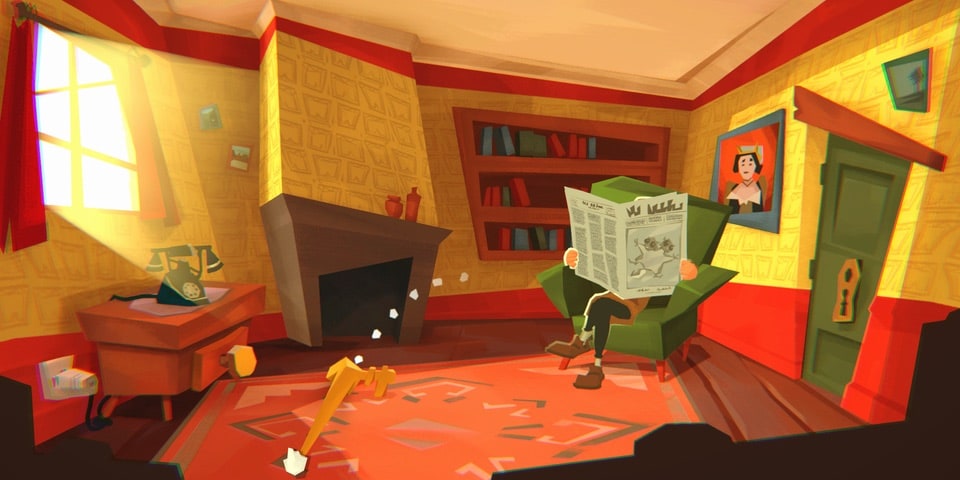
TSA – How do you feel about the Steam tag “point & click” being applied to the game, when you grab, pull and release everything instead?
Freddi – To be honest, I’m more concerned about the strange use of the tag on Steam. As you can imagine, we’ve been keeping an eye on what other studios are doing, and we’ve discovered that a lot of people use this tag whenever you have to hover your mouse over something and click on it. We’ve reached the point where I wouldn’t be surprised to see an FPS with the “Point & Click” tag. After all, you point your “cursor” at enemies and “click” on them.
TSA – Are your versions of Holmes and Watson so stupid and oblivious because of some patriotic rivalry between France and Great Britain? And is that why you have to slap them around so much?
Freddi – I’d like to tell you yes, because England and France are bound by an ancient treaty: we’re the only ones who have the right to mistreat each other. Attack the English, and you can expect me to immediately take up arms (or to speak very loudly while pointing my finger at people). And there’s no doubt that the English do and will always do the same for us.
It’s a bit like we’ve sworn to grant each other this privilege, and no one will ever be able to take that away from us.
But otherwise, no: Sherlock Holmes and Dr. Watson are known for being a smart and dynamic duo. We wanted to play with those tropes to offer something fresh, by subverting their image. Sherlock Holmes is an idiot, Dr. Watson is a coward… And it works! At least we hope so.
And if you don’t like it enough to set our houses on fire: ask the English for permission.
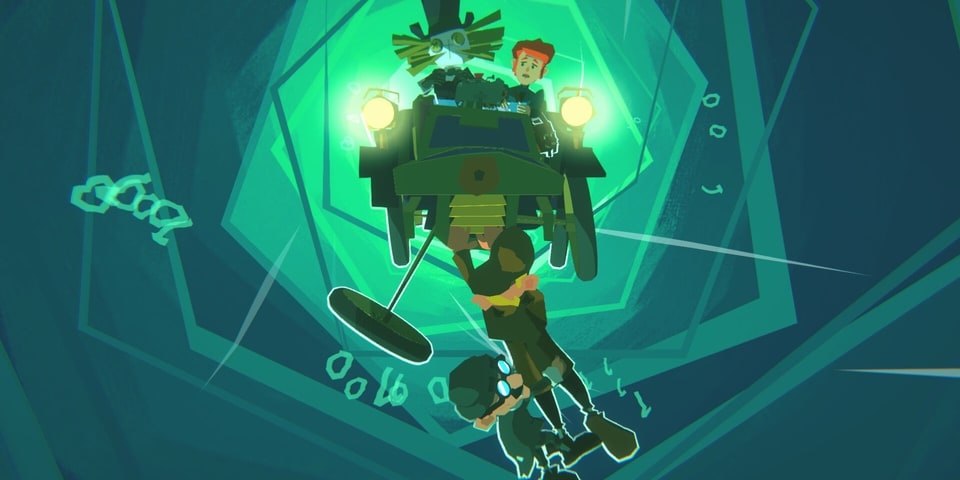
TSA – At the same time, are you worried that you’ve made Watson too irresistibly sexy?
Freddi – Oh my god, thank you! Yes, I thought I was the only one.
TSA – Have you ever run into a bug in the game where you can’t figure out if it’s meant to be there or not? And did any of them get elevated to legitimate “bug as a feature” status?
Freddi – The upside of this kind of game is that bugs often turn into something downright terrifying, which might explain why we don’t do crunch at Draw Me A Pixel: no one wants to see a twisted Sherlock Holmes who seems to be staring right through the screen (and into your soul).
So, no, everything’s fine on that front—the only bugs that make it into the game are “narrative features*” we added ourselves.
*In any case, that is the term we will use in court.
Alright, Freddi, you’ve weathered the storm fairly well, and we do have some more sensible questions about Crushed in Time as well…

TSA – How have you created variety in interactions for the elasticity, not just pull and release, but adding variety?
Freddi – This was something that came up very early on in the game’s design. We wanted to make a point-and-click game, but we quickly realised that we’d find it boring.
Mind you, we’re huge fans of point-and-click games, you know. Sam & Max, Monkey Island, Discworld, Full Throttle, Day of the Tentacle… We grew up with these games, and it’s no coincidence that we decided to make this. However, the world of video games has evolved, and our expectations in 2026 are no longer what they were in 1995: many of us have a wealth of gaming experience that has reshaped our expectations.
So, when we finally decided that making the game elastic was a good idea, we quickly realized: stretching and releasing things is fun for about five minutes. So we needed to bring variety to the interactions, and through repeated iterations, we eventually defined five ways to interact with the world and its characters. But when you look closely, every interaction is based on the principle of elasticity. For example, the ejection mechanic works on the principle that you stretch a light object and it will fly off somewhere when you let go.

TSA – There’s quite a lot of timing-based puzzles that take a bit of getting used to compared to a more traditional point & click game, and that leads to more trial and error, I feel. How do you counteract that?
Freddi – This was something that gave us a real headache during development, and playtesting was very helpful in finding the right balance.
One thing we wanted to avoid was creating a classic point-and-click adventure where you just point and click on things.
No, not like in FPS games—come on, keep up.
Throwing in these kinds of sequences every now and then helps shake the player up a bit, telling them, “Okay, for the next two minutes, you’re going to have to stay alert.” But we don’t want to lose the players who are, above all, puzzle enthusiasts and who might end up throwing their mouse across the room (provided it’s wireless, of course). And I think we’ve struck a good balance with these few sequences: it’s a bit like adding a very light pinch of chili pepper to a dish that might otherwise lack a little zing.
TSA – Was the popularity of Holmes and Watsons from There Is No Game surprising to you?
Freddi – To some extent, because Sherlock Holmes and Dr. Watson, much like Hero and Princess, are sort of just passing through in TING. They stick around for a chapter or two, then bow out to make way for the next characters, while the real stars are Game, GiGi, and Mr. Glitch.
However, we’ve noticed a huge attachment from the community over time to Sherlock Holmes and Dr. Watson, as evidenced, for example, by the numerous fan art pieces we’ve received over the past five years.
Nevertheless, the biggest surprise remains Mr. Wilhelm. He was just a completely minor character in TING, and when we announced his return, we received a veritable avalanche of positive comments. Fans were so thrilled to see him back that he ended up inspiring a few memes within our community and from us as well.

TSA – What actually led you down this framing device with the “broken” game?
Freddi – The desire to do something different. At Draw Me A Pixel, we all share this desire to create games that offer a different take on what we’re used to seeing. Pascal (our Writer & Director) often says to us, “Okay, that’s good. But what does it bring to the table?” And that’s something I think is reflected in our games, in how we communicate, and in so many other ways. We don’t just settle for doing what works or what people like—we strive to add a little something extra.
And I won’t hide the fact that sometimes, we’d love to just say, “Come on, let’s make a roguelike with elves and call it original because there are lasers.” But in the end, we always come back to that same question: “Okay, but what does that add?” And we keep reworking our draft until we’re satisfied… Or until we go to bed completely fed up and annoyed, because creative miracles don’t exactly happen every day.
Thanks to Freddi for putting up with our shenanigans… though in fairness, we’re having to put up with Draw Me A Pixel’s shenanigans too. Keep an eye out for our review of Crushed in Time tomorrow!