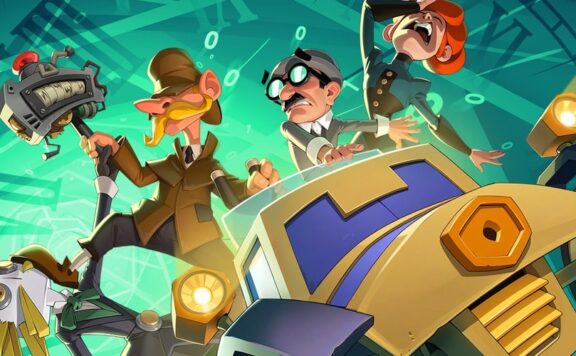
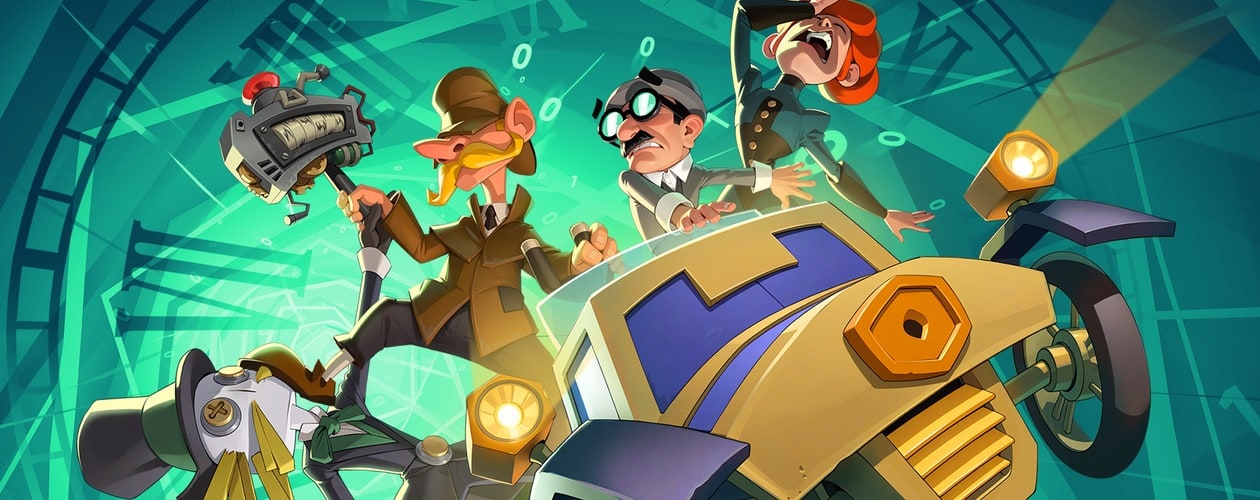

Crushed In Time really ought to be called something like The Elasticated Adventures of Sherlock Holmes and Dr. Watson, or maybe Holmes & Watson Break Their Game (and Then Fix It Again). Here’s a point & click adventure that takes many of the typical conventions of the genre and slingshots them right out the window, a game where you get to explore every moment of its development and creation. Or at least, that’s how the story goes…
It’s launch day at Draw Me A Pixel’s glitzy high-rise HQ, but their game is getting review bombed into oblivion as an NPC has gone completely missing. As the team frantically try to figure out what’s going on, the digital denizens of their creation end up on their own adventure through time, all of which starts with a knock on the door from the postman.
The letter handed to Watson by the postman, however, defies gravity. And so we immediately get into how Crushed In Time differs from the likes of Escape from Monkey Island or more modern adventure games in the Telltale style. Instead of telling your heroes to go somewhere and interact with something, whether that’s by pointing and clicking, selecting verbs and actions, or having direct movement control with a gamepad, you’re manipulating the world around Holmes, Watson and everybody else.
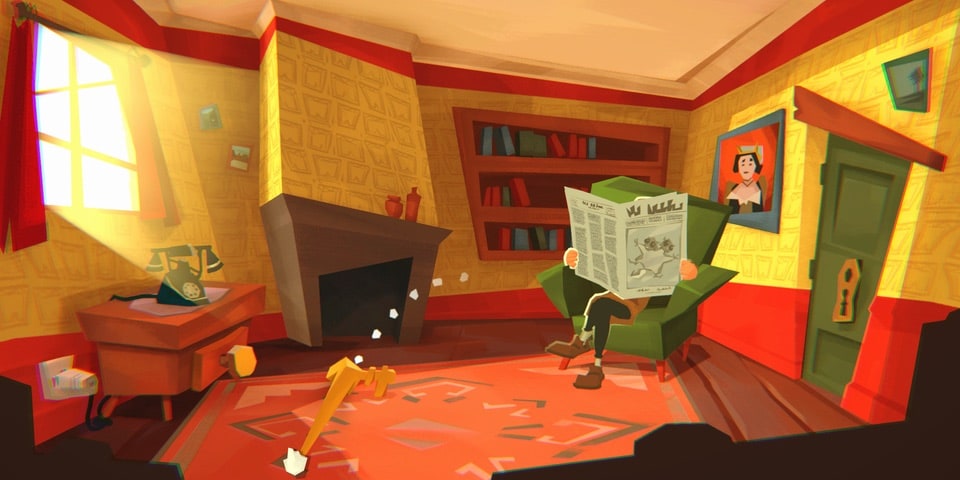
The whole world is elastic, and all of the interactions require you to click and hold to grab onto an object and then pull and release in a variety of directions and different manipulations. It can be a simple directional stinger to pop a door open – pull left and release to spring it open to the right – or repeatedly pinging an item across the floor, grabbing and rotating and object to wind it up, timed releases, and simply slapping characters to get them to move somewhere else. It’s genuinely impressive how Draw Me A Pixel has come up with this handful of interactions and then applied them in so many different settings. Heck, even the menus and hint system need you to drag and release the buttons!
Retrieving that letter from the ceiling requires a hefty dose of classic point & click lateral puzzle solving. This initial problem has you manipulating the dumb waiter hatch, clock, telephone, messing with Sherlock’s newspaper and so much more to reach the point at which the two men are able to actually read it. And then it’s from this mystery woman called Emma?
Heading out to the country to find Emma starts them on a wild adventure where some bugged letter physics are the least of their problems. Crushed In Time has them bouncing back and forth between different periods of the game’s creation, back through to early alphas filled with placeholder assets and broken things, and even, on occasion, busting through into the real world and other electronics. It’s a bit tangential how a faux Game & Watch in the cafeteria is related to this game’s development, but these moments do make for some fun interludes.

Holmes and Watson are a bickering couple throughout – not least as Watson and Emma become thoroughly enamoured with one another – and a lot of that revolves around how utterly oblivious they are to your presence. Holmes just explains things away, or blames Watson for them, while Watson has more of a feeling that strange things are going on, but can’t possibly work out how to explain them or get Holmes to acknowledge it.
It’s nice and humorous all the way thorough, but also with some real heartfelt moments as their adventure comes to several climactic moments. There’s a bunch of times where it feels that the game is drawing to an end, only for a cutscene to drag you off to another new setting and gameplay paradigm, and another version of the crisis that they are enduring.
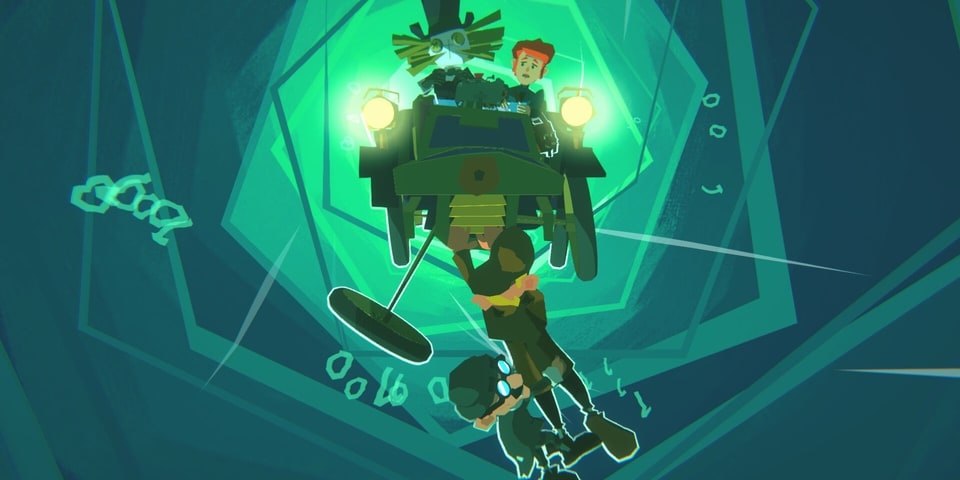
Each chapter brings fresh ideas, and I’d say that only one of them really outstayed its welcome for me – sadly this was the penultimate chapter, which just made me more eager to see the ending for the wrong reasons. Draw Me A Pixel has also just about managed to walk the tightrope of point & click puzzle frustration, as well. The elastic interactions mean that there is a lot more timing-based puzzling through Crushed In Time, so you might need a character to be in one spot and then you interact with another object quickly enough to trigger the next action before they wander off. That does lead to more trial and error than I would have expected and repetitious cycles of actions, and with dialogue repeating as well. That can be a bit annoying, but the hints system is pretty good at nudging you in the right direction if and when you need it.