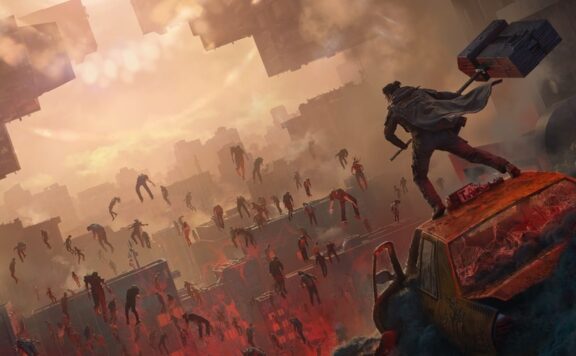


It’s been seven years since we were first introduced to The Oldest House, a TARDIS-like building in New York packed with brutalist architecture and multidimensional creatures. Since then, the Control universe has expanded with the shooter FBC: Firebreak, while FBC director and protagonist of the first game, Jesse Faden, also featured in Alan Wake 2.
Now we have Resonant, which continues the story of Control, but takes a very different approach to gameplay. Abandoning the third-person shooter format, the game instead opts for a Devil May Cry-style melee combat adventure and introduces Jesse’s brother, Dylan, as the new protagonist.
This time, it’s Jesse who has vanished, leaving Dylan working for the FBC as he attempts to track down his missing sister. His efforts are complicated by the fact that the rest of the FBC staff keep him at arm’s length due to his history as a mass murderer, albeit an unwilling one. Needs must, however, and with Dylan’s abilities seemingly the only hope of saving New York, an uneasy alliance is formed.
The Hiss have escaped from The Oldest House and spilled into New York. Their emergence coincides with the appearance of another Altered World Event (AWE), leaving the city overrun with nightmarish creatures in various forms. Assisting Dylan is his handler, Zoe, who directs him throughout his missions, alongside returning characters such as Emily Pope and the delectably named Casper Darling.
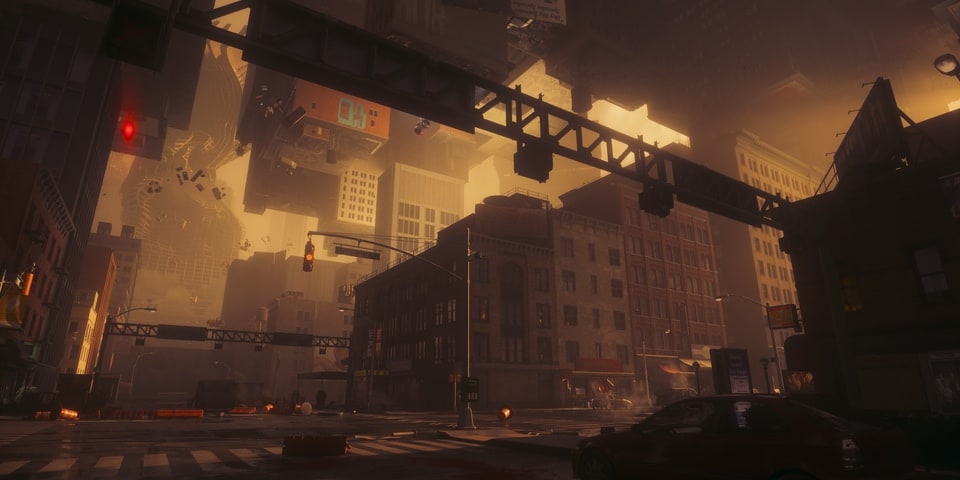
Stepping outside you quickly get an idea of just how big Resonant is. Control had some larger areas, but with everything contained (sort of) within a single building, the game could still feel somewhat confined. Resonant, by comparison, features huge open spaces packed with verticality, tunnels and secrets. The story begins in New York, but in a game all about battling multidimensional entities, it’s no surprise that things eventually expand into other areas.
One part of the map is smothered in an apparently delicious green mould, which has transformed anyone unfortunate enough to eat it into furry, shambling behemoths intent on spreading their infection even further. I’ve been to New York and I doubt anyone there would bat an eyelid at homicidal mould people, but here they pose a real threat.
The combat in Resonant is rather unforgiving, if you’re expecting to Kratos your way through the game by simply mashing buttons, you won’t get very far. The combat loop relies on successfully timing your dodges, which gives your next attack a power boost, as well as ‘faltering’ enemies. This staggers them, allowing you to perform an execution move, which in turn grants another temporary boost to your attack power.
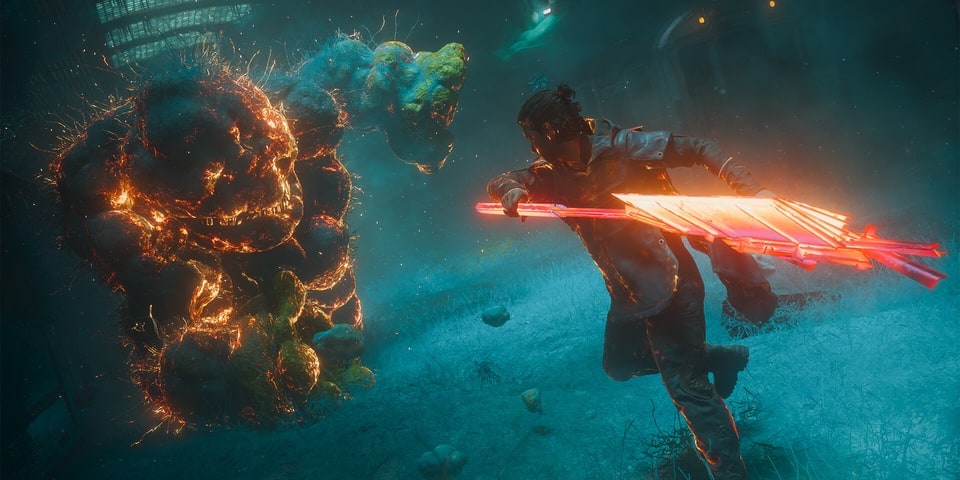
While all this is happening, every successful hit builds your power meter, allowing you to unleash special attacks, summons, or defensive abilities that you’ve equipped. On top of that, certain enemies are more susceptible to particular attacks, meaning you’ll need to change your tactics depending on what you’re fighting. One nice touch is that you can occasionally find two enemy factions in one location and they will happily attack each other while you sit on a roof top and wait for them to do the hard work for you.
Every battle is a blistering combination of acrobatics, tactics and fury, and you’ll need to get to grips with all three pretty quickly. The combat is hugely rewarding once you start chaining everything together, and Dylan has shades of Wolverine’s raging fury as he screams, leaps from enemy to enemy and repeatedly stabs them to death with his enormous, spiky stick.
As you play, certain missions unlock new abilities and Dylan’s powers can also be upgraded through a skill tree, alongside upgrades for his weapons and special abilities. You can see the game’s early development direction leaning towards the RPG genre within this, but the skill tree has clearly been pared back. While you can customise your loadout, you’re ultimately a generalist capable of handling most situations rather than a specialist built around a particular playstyle.
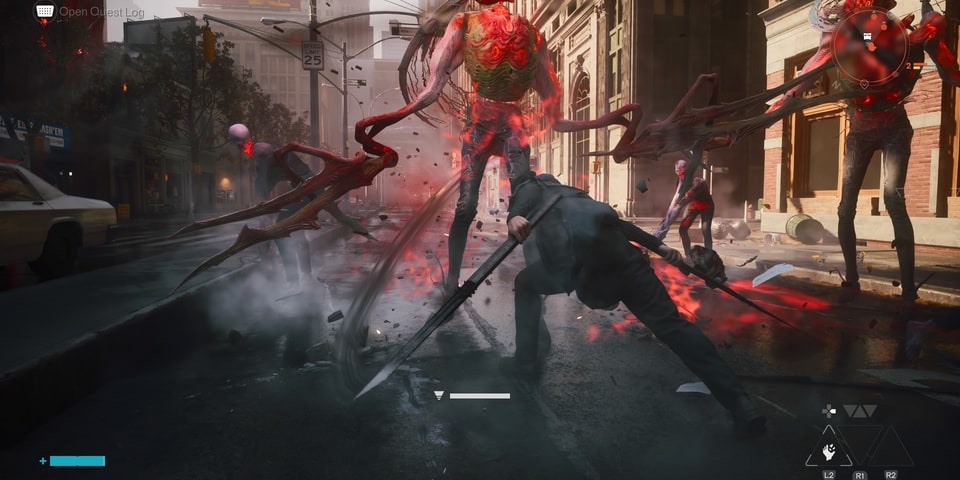
There is a lot of hacking and slashing to be done — perhaps too much — but as your skills only level up by defeating creatures, you don’t really have much choice. You can run past the seemingly endless groups of enemies camped out at junctions and on rooftops, but you won’t get very far when you reach a boss battle unless you’ve powered up sufficiently.
It doesn’t help that enemy spawn patterns are almost identical in many battles. Fight a group of mould creatures, and you’ll get two floating, puffer-fish-type enemies, followed by two ‘Hulk’ mould creatures once you’ve taken them down. There’s very little in the way of surprise after that first appearance. Occasionally, however, you’ll encounter a more unusual enemy, such as half a bus, eternally crashing and perpendicular to the floor — yes, you read that correctly — which spices things up considerably. I don’t know about you, but performing a fury-induced finisher on half of New York’s transit system will always make me smile.
If you do find things getting a bit too much, Remedy has integrated a rather clever way of allowing you to adjust the game to suit your playstyle. Rather than the usual Easy, Normal and Hard modes, Resonant gives you a set of sliders that can alter various aspects of the difficulty, including your power, enemy attacks and the length of the dodge window. It’s a simple idea, but no doubt a lot of work to produce. Even so, it’s something more games should take note of.
There are a few puzzles scattered throughout the main missions, none of which will trouble you too much as their solutions are generally well signposted. Some of the side missions will make you think a little harder, however. What will really give you a headache is gaining the ability to flip gravity, turning walls and ceilings into the floor.
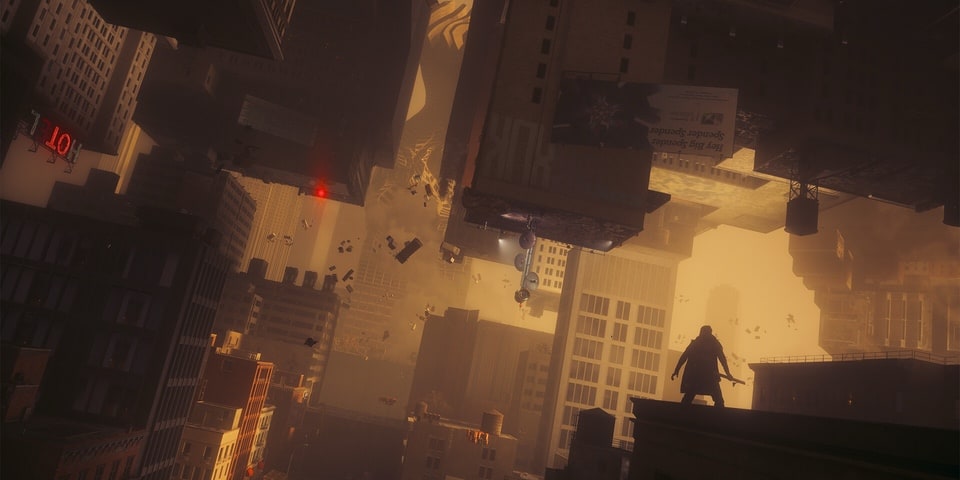
It’s a wonderfully cool mechanic with shades of Gravity Rush to it. Leaping towards a distant wall and flipping gravity at just the right moment so that it becomes a solid surface beneath your feet is immensely satisfying. The problem comes when you need to navigate from A to B using nothing more than a flat, 2D map. It becomes very easy to lose track of where you are, where you were, and where on Earth you’re actually supposed to be going.
As the game progresses, the two plots — the destruction of New York and the history of Jesse and Dylan — are gradually woven together. I suspect that some of the story elements, or more precisely the way they are presented, are going to be divisive. One of these moments is incredibly beautiful and poignant, while another, towards the end of the game, is likely to raise a few eyebrows. I’ll admit, it made me smile when I worked out what was going on, and it was fun for a few minutes. Unfortunately, the joke carries on for well over half an hour and the humour wears off rather quickly. It feels a very flippant way of conveying a key plot point that could have had so much more emotion and gravitas if it were a cutscene.
Remedy has taken some really big swings with Resonant to make it stand out. Some of them land, some don’t. A more positive example comes when Zoe decides that she wants to work out what music Dylan likes. Up until this point, the game’s soundtrack has largely consisted of a cacophony of squelches, yelps and groans, but it’s suddenly being replaced by what can only be described as an absolute banger of a funky house tune which I Shazam’d immediately.

Later in the game, I found myself stuck for a good hour. I threw every gaming trope and trick I could think of at the problem, drawing on 40 years of playing video games, and still came up with nothing. Eventually, I gave up and did the one thing you obviously never do and of course, that turned out to be the solution. It’s funny, it’s clever, and I absolutely want to give Remedy a good spanking for doing it.
Personally, I felt that Control: Resonant could have done with a little more editing and restraint. It’s a big game, but a lot of that size comes from open spaces populated by the same handful of enemy types. The story feels stretched across around 30 hours of gameplay — closer to 50 if you’re aiming for completionist territory — and some of the more out-there sections do overstay their welcome. It’s certainly not Assassin’s Creed levels of padding, but there is an awful lot of additional material to get through, and hundreds of text files to find and read, if you’re so inclined.